

The Tools of my Toolbox (2 of 2)

This is part 2 of the tools of my toolbox. ‘It’s not about the tools but the toolbox’. This was a statement Dave Rogers posed on his blog last week. It is quite tricky as every teacher has different views on what they need to be successful and to help their everyday lives. Here are my remaining tools of the trade:

  • Thinking Outside the Box

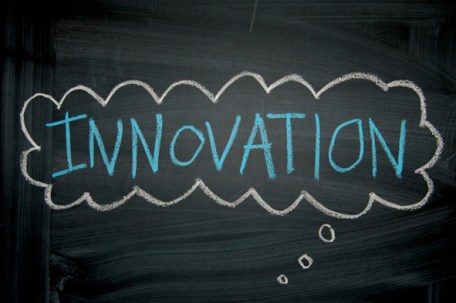
Being innovative and brave within a classroom can bring enjoyment, success and respect. I admit not every idea I have tried has worked but those that do can enhance the student’s experience of your subject. Trialling new ideas improve your lessons and enjoyment as a teacher. It is not always easy trying out new ideas. It is very easy to stay in the comfort zone but without trying out new ideas we do not develop ourselves as teachers and will not improve. Idris Mootee, of  the innovation playground blog,  has said, ‘innovation is hard, it is not about getting the ideas at all, it is about managing ideas. So you have a few great ideas, so what? The future is never about the future but now.’

  • Reflecting

As teachers we must be more reflective of our own practice and make amendments where we need to. We must utilise our strengths and work on our areas of development. Observations are vitally important to watch other teachers and how students learn. This would be ideally done within the Department and with other Departments once a term where possible. This should therefore improve our own teaching and benefit the students .Working with other colleagues will help develop cross curricular opportunities to raise achievement throughout the school. I always try evaluate my lessons on a daily basis – you should be aware if you have taught a good lesson or not – and more importantly how could it be improved.

  • Teaching is Fun

As teachers we work long hours and spend many lessons preparing and planning work. We have the aim of teaching the National Curriculum and working with our students on achieving their personal best and gaining the grades they deserve. But…we must enjoy our working life. There are many pressures in the education industry and targets to achieve. Teaching in my opinion is the greatest role in life that someone can do. To actually see the look of wonder and understanding on someone’s face is something that cannot be bought. To pass on knowledge and see where it takes a young person in life is amazing. To actually help young people in life choose a path in the life with your encouragement and guidance is breathtaking. There is much to enjoy from teaching, just don’t forget the positives!

  • The Mighty Board Marker

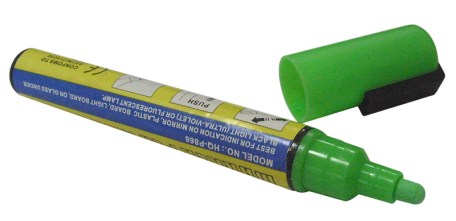
Where would any teacher be without a board marker? Sometimes this little tool can be forgotten with the overkill of Powerpoint. Remember, simple ideas can make learning easy.

The Importance of Teaching

The Importance of Teaching – this is the name the Government chose for the White Paper underpinning the Education Bill.

Teaching is a popular profession for many graduates. The number of graduates completing PGCE’s has steadily risen over the last few years. It is a role that people find exciting, challenging and extremely stimulating. It is a profession where we are able to move people forward in their aspirations and assist their learning. Education does sometimes get too much bad press and the papers gloss over the successes and achievements that teaching has bought to so many thousands of pupils and students.

Unfortunately, I was sad to read that the number of teacher training places at universities and colleges is to be cut by one fifth. The Coalition wants more teachers to learn their skills on the job in schools rather than in training colleges. Now I agree that we should have more on the job training – it’s where I learnt my skills and it was where I did most of my learning– but fewer teachers and training opportunities? Universities and teaching colleges offer fantastic teaching expertise and facilities that should be further funded. 

Michael Gove, the Education Secretary, is also taking an axe to the bursary packages currently enjoyed by trainees. I received £6,000 for a year of training for my PGCE. Without this funding I would have been unable to have trained as a teacher. Being a student is expensive and even more so today. Travel, accommodation and food is not cheap. Funding has gone for subjects such as English, history, geography and art.

Instead, those who want to train as physics, chemistry, engineering and maths teachers will receive bursaries of £9,000 a year. Trainees who want to be biology, general science or foreign language teachers will receive £6,000 a year. This maybe in response to subject demand but I am sure we will need teachers in english, history, geography and art in the future and these cuts maybe putting off hundreds of potential brilliant teachers.

Michael Gove has also outlined plans to only accept trainee teachers with 2.2 degree or above. Yes, we do need qualified teachers with good knowledge but isn’t the ability to teach and inspire important too? There are thousands of teachers who are fantastic at their job, inspiring and motivating everyday but may not necessary have a 2.2 or above. I think Michael Gove has got his agenda wrong on this point. What degree you hold should not define or hold you back from teaching.

I do agree that we need competent, dedicated and enthusiastic teachers in our schools. But, we must work together and I just wished the Government had involved more teachers in their decisions.

As Batman once said, ‘it isn’t what you say that defines you but what you do’ (Batman Begins, 2005).

Genius Unleashing

Is there a genius in all of us? This was a question posed by David Shenk, author of The Genius In All of Us. It was generally believed in science that people’s talent was genetic, but new science suggests the source of abilities is more a developmental process and this includes what we get from our genes.

David Shenk says, ‘Our abilities are not set in genetic stone. They are soft and sculptable, far into adulthood. With humility, with hope, and with extraordinary determination, greatness is something to which any kid – of any age – can aspire.’

This is an interesting thought for which many teachers. A persons genius could be drawn out by inspiration and motivation, and who knows who will be a genius? We have classes of young people on a daily basis who are the future – don’t forget to inspire!

Barcelona 2010

This year I have had the chance to organise the A’Level field trip to Barcelona. I have organised many field trips over the years but this was my first overseas trip. At Gillingham School the Geography Department have been going to Barcelona for the last twelve years with much success. Initially it was quite daunting planning a trip overseas but I have had much help and guidance for which I am especially grateful for – thank you team!

For our A’Level the students are requested to undertake several days fieldwork which they are assessed for in January as part of an examination. Our focus for the trip was rebranding and extreme weather. Going to Barcelona lets us complete all these topics and at a much cheaper cost compared to the UK. We also complete our fieldwork with the Barcelona Field Studies Centre who are very experienced team of geographers run by Derek Geary.

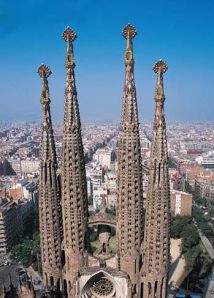
Day one consists of an orientation tour of Barcelona city and a pre-fieldwork session outling the field trip.

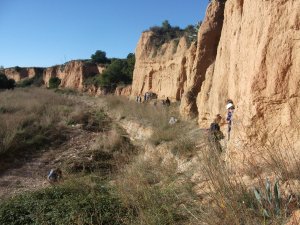
Day two is primarily the extreme weather day focusing on flash flooding at the River Ribes.

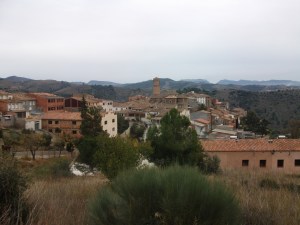
Day three is the rural rebranding day in the Priorat region of Spain looking at the success of the wine industry.

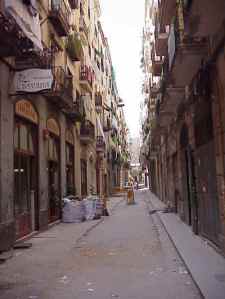
Day Four is the urban rebranding day in El Raval looking at the success of the flagship development projects.  

After each day the students work extremely hard on looking at and evaluating their methods, results and conclusions. Well done and thank you to everyone involved – you were all brilliant!

London Futures

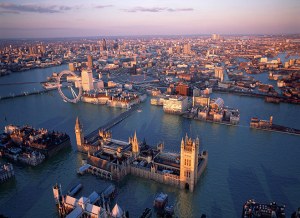
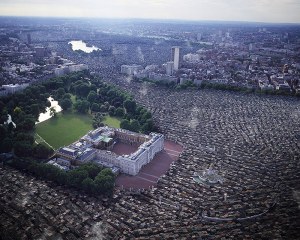
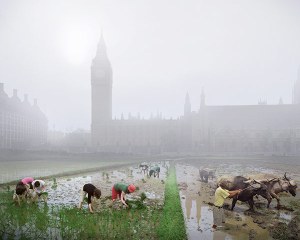
A new exhibition to illustrate London’s  landmarks in an environment transformed by climate change, is being held at the Museum of London. The photographs have been digitally changed by illustrators Robert Graves and Didier Madoc-Jones. The display shows the full impact of global warning, food scarcity, rising sea levels and how people will need to survive and adapt for the future. The exhibition is running from now till March 2011.


Teacher Tools

With the new term fast approaching, I have started preparing for my new classes and aims for the year. Before the summer break I outlined my five objectives for the year ahead and wrote about them on my blog back in May. These were:

  • Teaching & Learning
  • Assessment for Learning
  • Reflective Teaching (including observations)
  • Technology
  • International link with a school abroad and feeder schools

With these five objectives in mind it has got me thinking what are the most important tools to achieve this? What do we need as teachers on a day-to-day basis? What are the best web pages/blogs for guidance? What tools can we do without to teach? I will be putting my list together on the next few days, but I would like to hear your views and share them.

Reflective Teaching

This year in education has been one of change and planning for the future. With the new GCSEs, AS/A2 curriculum changes it has given me much to think about since I joined Gillingham School in September 2009. Joining a very successful school and department I have had big shoes to fill, a challenge I have relished. I believe I have put in place the correct building blocks for the future. This month I have had a chance to look back and reflect upon our successes and future developments. For a successful department I believe you must not look at too many areas to change, focus, innovate or tweak. Geoff Barton, Headteacher of the King Edward XI School likened managing a large department to plate spinning, you have to be able to manage each of the areas you start to change – too many and the plates start crashing around you. Personally, a maximum of five strategies/innovations is perfect. Making sure your strategies are manageable and flexible you are able to keep a good grasp and move the strategies forward.

Idris Mootee, of  the innovation playground blog,  has said, ‘innovation is hard, it is not about getting the ideas at all, it is about managing ideas. So you have a few great ideas, so what? The future is never about the future but now.’

The five strategies we will be focusing on are outlined below:

  • Teaching & learning

The primary target for improvement this year revolves around teaching & learning within Geography. As a Department we want to teach the best we can and we are looking at our lessons and seeing where we can make improvements and implementing new teaching strategies. We must make our teaching experience more personal for the students and improve their independent study skills. This must be developed from KS3 onwards and carried on within the school.

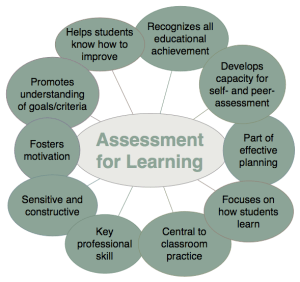
  • Assessment for Learning

AFL is a very important skill and is an area where we could develop within Geography. As teachers we are sometimes too controlling and we must put the onus back on the students for them to achieve. Investigating methods and ways of implementing this into our schemes of work must be one of our priorities. This will encourage student learning and raise achievement across all year groups. AFL will also help improve the student’s knowledge of using a mark scheme and what to include in a good answer. This will reduce our marking and in the long-term our workload.

  • Reflective Teaching (including observations)

As teachers we must be more reflective of our own practice and make amendments where we need to. We must utilise our strengths and work on our areas of development. Observations are vitally important to watch other teachers and how students learn. This would be ideally done within the Department and with other Departments once a term where possible. This should therefore improve our own teaching and benefit the students .Working with other colleagues will help develop cross curricular opportunities to raise achievement throughout the school.

  • Technology

Geography has prided itself on using technology where possible to improve our lessons and the student experience. This needs to be further developed to further enhance our learning and the students. GIS must be developed within the Department across all year groups.

  • International link with a school abroad and feeder schools

As part of our role in the local and global community we would be looking to develop a link with a school abroad. This would develop our student’s knowledge of their role within a global community and understanding of issues that occur worldwide.

Locally we would like to work with the feeder schools on developing our link and improving geography. This would enhance geography’s status and develop their geographical knowledge. Geography is sometimes not always taught in primary schools to a high level and we would like to develop this to help their progression and achievement later on.

Please get in contact regarding what your departments/schools are planning/changing for the future…I would love to hear them especially in these uncertain times with possible budget/curriculum changes.

innovation playground

A blog I have been recently reading courtesy of my brothers’ insistence is Idris Mootee’s innovation playground. Idris is a business strategist and business specialist who blogs about his thoughts and feelings regarding business, innovation and emerging technologies. He is the founder of Idea Couture, winner of the innovative company of the year award. 

Idris Mootee is an authority in strategic innovation, a system and design thinker, Idris partners with clients in all sectors globally to identify their highest-value innovation opportunities, address their most critical challenges, explore strategic options and develop breakthrough ideas.

Idris is a huge fan of thinking outside of the box and using your imagination to move forward or solve problems. It is a very thought-provoking, interesting and humorous read regardless of your education/business background. Idris has several ideas that can be transferable to a school or department. I particular love his use of quotes in his blogs (how does he know so many?!?).  He is very forward thinking who is always trying to stay one step ahead of the crowd…which perhaps is why he is very successful at what he does. I recommend reading innovation playground…it’s the future. It has many links to education and how we teach young people using his ideas from the world of business, a major part is enjoying yourself and having fun. If we gave a five-year old a cardboard box, a pen and a ruler and told them to design a hotel, they would. But if we gave the same scenario to an adult, they would come up with problems. This is a process that happens as a person gets older and we seem to put up barriers. We must become more innovative in education and look outside the box occasionally.

If Idris would ever like to catch up for a coffee to discuss the future of schools and education I would be more than happy!

Where now for geography?


After a very long and stressful journey to work today I was pleased to see one of my articles printed in Sec-Ed. Sec-Ed is the UK’s only free national teaching paper that is sent to every UK Headteacher and staffroom. I am a huge fan of the paper with its well written articles and comments on education and teaching in the UK. I have been very lucky in the past to have had several articles printed by them and I hope this continues for the future. Thank you to Pete Henshaw (Editor)  and Chris Parr (Chief Reporter) for all your help.

The article is titled  ‘Where now for geography?’ and focuses on geography’s fight for survival as a curriculum taught subject. This is quite a personal article being a geographer and I am very passionate about geography’s role within a schools curriculum. The article can be accessed here for your perusal. Enjoy!