Thank you to Scholastic Education, Creative Blogs and Primary Blogger for sponsoring the awards this year.
Every edublogger has been blogging away in anticipation. But who has won? Click here to find out! Well done to all the education bloggers in the blogosphere – keep up the good work!
‘It isn’t what you say that defines you but what you do’
These are the wise words of Batman that every aspirational teacher should know.
Teaching is a popular profession for many graduates. Last year 16, 845 people completed a secondary PGCE. The number of graduates completing PGCE’s has steadily risen over the last few years. It is a role that people find exciting, challenging and extremely stimulating. It is a profession where we are able to move people forward in their aspirations and assist their learning.
Unfortunately, I was sad to read recently that the number of teacher training places at universities and colleges is to be cut by one fifth. The Coalition wants more teachers to learn their skills on the job in schools rather than in training colleges. Now I agree that we should have more on the job training – it’s where I learnt my skills and it was where I did most of my learning– but fewer teachers and training opportunities? Universities and teaching colleges offer fantastic teaching expertise and facilities that should be further funded. This maybe in response to subject demand but I am sure we will need teachers in the future and these cuts maybe putting off hundreds of potential brilliant teachers.
Nicholas Hargreaves of Radipole School, Weymouth says, ‘teaching is a wonderful career choice for anyone. From a young age several teachers and friends helped and encouraged me to aspire to become a teacher. To provide young minds with the knowledge, skills and passion to take control of their lives and become the experts of tomorrow. Personally it has given me the chance to inspire young people with my knowledge and expertise. Working with a group of like minded teachers and young people is extremely inspirational. It is a role I have always been determined to succeed in and work hard for.’
The role teachers’ play in their local community is also central to a student’s development. Schools’ and communities must work collaboratively together for an area to benefit. Economic investment is a necessity with schools. Schools are the training ground for our future generations and they need to be at the forefront of technology for our young learners with the very best facilities for them to achieve their potential. The local community and schools’ must be incorporated into working together to create an ethos of self belief and to achieving their personal best. The community must be involved in their local schools creating community centres, so local people can benefit from the facilities and technology a school has. A community that sees the benefit of an education can help generate our leaders of tomorrow but they must work in partnership with the local schools. We as teachers are the facilitators of this role and can help enrich a wide variety of lives in the process. Working with the local community to enhance the school ethos and help an area develop.
Russell Wait, Curriculum Leader of Global Studies at Cove School, Hampshire; ‘I was inspired by my secondary school Headteacher who encouraged me from the tender age of 12 to reach my aspirations and goals. I find that teaching is an ever changing occupation that keeps you on your toes. To teach the future generation of Britain with a passionate voice can create change and can only be a benefit for the country’.
Many professionals from industry are turning to a career in teaching because of the many benefits the role brings. They bring with them a vast range of experiences from industry that can only enhance the profession. Experience from outside the classroom and shared with the students is vital. Young people do need to have role models and even though they sometimes might not want to admit it, teachers are a very important one. It is very clear that many people want to train as teachers but cannot afford to take a whole year off for training. With the recent credit crisis it is understandable, but it does show that people do want to be teachers.
Thank you to everyone who nominated and voted for my blog for these two awards. As a fairly new blogger (since January 2010), I am extremely pleased with being shortlisted. My blog is now being judged by five judges; John Davitt, Paula Hubbard, Ollie Bray, Margaret Vaas and Tim Rylands. The blog winners will be announced on 1st June – good luck to all the bloggers who have been shortlisted!
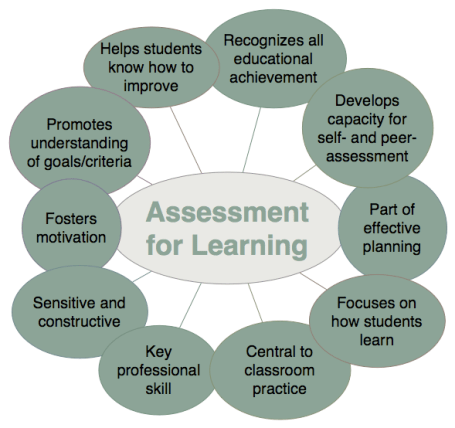
AFL is a very important skill and is an area where we could develop within Geography. As teachers we are sometimes too controlling and we must put the onus back on the students for them to achieve. Investigating methods and ways of implementing this into our schemes of work must be one of our priorities. This will encourage student learning and raise achievement across all year groups.
AFL will also help improve the student’s knowledge of using a mark scheme and what to include in a good answer. This will reduce our marking and in the long-term our workload.
Geography has prided itself on using technology where possible to improve our lessons and the student experience. We would like to incorporate electronically submitted assessments, Podcasts and revision tools into our schemes of work. The VLE is a huge potential as revision resource. This has the opportunity to encourage our disaffected boys at KS4 and KS5 who are underachieving compared with the girls.
With the new syllabus changes at GCSE and A level a key skill that needs to be developed is the use of Geographical Information Systems (GIS). GIS must be developed within the Department across all year groups. Along with these ideas should be the development and use of mobile phones.
The intrusive ringing and sounds of a mobile phone maybe the future of education. This is a very bold statement for a teacher to make. In the majority of schools, mobile phones are banned, but that maybe changing across the country. Mobile phones are an untouched resource that could be more of a help then a hinderance.
The technology available to us as teachers is immense and is changing at a rate faster than we are able to keep up with. Students and pupils are far and away ahead of us as teachers when it comes to technology. As a teacher we are forever changing our teaching methods and resources. Mobile phones could help enrich a subject and make it more widely available for all students to participate. Mobile phones have so much potential for the classroom. They will enhance a students learning. They will give students skills that they will use in the wider world. They will bring benefits that will develop our teaching.
With an ever-changing world, it is time for our Geography curriculum to change. Since joining Gillingham School in September 2009, we have rewritten the GCSE course and made amendments to the A Level course. Now that they are finally in place we can turn our attention to Key Stage 3.
Key Stage 3 is the building block of geography within every secondary school. It is where some students are only just learning the subject for the first time and building upon the foundations of their learning at KS2. We are turning KS3 upside down on its head at Gillingham and shaking it for the first time in several years. We already have a large uptake at GCSE and the students enjoy their lessons. We it is time for a change, to gain the skills and knowledge required at KS4 and beyond, a new layout must be put in place.
Currently we teach five/six topics across each year group. With students becoming more interactive and demanding more knowledge, we have decided to go for a format of eight separate topics of eight lessons each. We currently teach four lessons over a two-week timetable. This means topics will interchange at a fast rate, we won’t get bogged down in one topics and it keeps it exciting for the students.
We do seem to be on a continuous cycle of rewriting, but we must not forget the building blocks of a successful education. Key Stage 3 can be sometimes be forgotten about in this world of examinations at KS4 and 5. The young students at KS3 need the skills and knowledge to help them in their later geography education. It also means we can dip out of the curriculum when we need to – eight topics x four weeks = 32 weeks out of 39 teaching weeks. This would enable free time for us to look at world events that take place i.e. Geography Awareness Week, Fairtrade Fortnight, Japanese earthquake etc. The topics we have discussed so far have been using some of the current lessons and new ideas we are developing.
This is your last week to vote for the UK Education Blog Awards 2011. The last chance to vote is 30th April. I am very pleased to say that I have been nominated. Thank you to everyone who has voted for my blog.
Why do I write a blog? Since I started writing my blog in January 2010, I have learnt and shared new ideas from many different teachers. I really enjoy sharing ideas with other practitioners and learning a new technique or way of doing something. Sometimes we are left to our own devices and perhaps we should be talking and sharing resources on a more regular basis.
For the last few years I have found blogs a great source to further my understanding and learn new skills as a teacher. I have always said that a teacher never stops learning. Just like our students we as teaching practitioners are constantly learning new techniques on improving our methods we use in the classroom. This is part of the reason why I love teaching, it is never dull and is a challenge I relish on a daily basis.
If you would like to vote for a blog – please follow the link here on at the top right hand corner which will take you to the Education Blog Awards website to cast your vote. Good luck to all the bloggers out there!
This is part 2 of the tools of my toolbox. ‘It’s not about the tools but the toolbox’.This was a statement Dave Rogers posed on his blog last week. It is quite tricky as every teacher has different views on what they need to be successful and to help their everyday lives. Here are my remaining tools of the trade:
Thinking Outside the Box
Being innovative and brave within a classroom can bring enjoyment, success and respect. I admit not every idea I have tried has worked but those that do can enhance the student’s experience of your subject. Trialling new ideas improve your lessons and enjoyment as a teacher. It is not always easy trying out new ideas. It is very easy to stay in the comfort zone but without trying out new ideas we do not develop ourselves as teachers and will not improve. Idris Mootee, of the innovation playground blog, has said, ‘innovation is hard, it is not about getting the ideas at all, it is about managing ideas. So you have a few great ideas, so what? The future is never about the future but now.’
Reflecting
As teachers we must be more reflective of our own practice and make amendments where we need to. We must utilise our strengths and work on our areas of development. Observations are vitally important to watch other teachers and how students learn. This would be ideally done within the Department and with other Departments once a term where possible. This should therefore improve our own teaching and benefit the students .Working with other colleagues will help develop cross curricular opportunities to raise achievement throughout the school. I always try evaluate my lessons on a daily basis – you should be aware if you have taught a good lesson or not – and more importantly how could it be improved.
Teaching is Fun
As teachers we work long hours and spend many lessons preparing and planning work. We have the aim of teaching the National Curriculum and working with our students on achieving their personal best and gaining the grades they deserve. But…we must enjoy our working life. There are many pressures in the education industry and targets to achieve. Teaching in my opinion is the greatest role in life that someone can do. To actually see the look of wonder and understanding on someone’s face is something that cannot be bought. To pass on knowledge and see where it takes a young person in life is amazing. To actually help young people in life choose a path in the life with your encouragement and guidance is breathtaking. There is much to enjoy from teaching, just don’t forget the positives!
The Mighty Board Marker
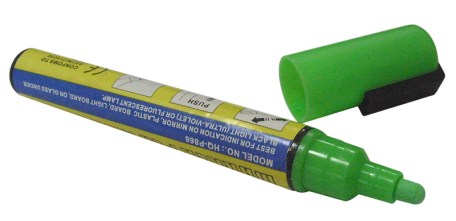
Where would any teacher be without a board marker? Sometimes this little tool can be forgotten with the overkill of Powerpoint. Remember, simple ideas can make learning easy.
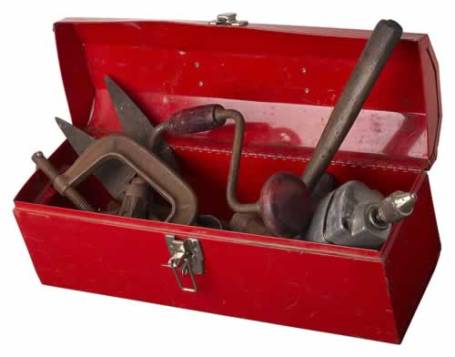
‘It’s not about the tools but the toolbox’. This was a statement Dave Rogers posed on his blog last week. It is quite tricky as every teacher has different views on what they need to be successful and to help their everyday lives. Dave was clever to state that no matter how many tools we have – it all depends how good the toolbox is. In other words, how good the teacher is at using the appropriate tools! As a very keen guitarist I used to get annoyed with fellow musicians who would be picky about what equipment they used – if you are a good musician the talent will always shine through no matter what you use. Of course a better guitar does have a better sound but essentially the key to the sound is the player! This is part one of two on the tools that I would have in my teacher toolbox.
So, what tools would my toolbox hold:
Working Together
Teaching can sometimes be a lonely job, with yourself up against thirty students challenging you. It can sometimes feel you are the Lone Ranger but that is not so. Using people around you can make your life much easier especially when you need help or guidance. For a young teacher this is possibly the best tip I can pass on…talk to those around you. I have worked in some great departments where working together and sharing ideas/work loads makes everybody feel important and better about themselves. The success of a department should improve too with more minds working together then one. The work – life balance is very important and should never be forgotten!
Blogs
For the last few years I have found blogs a great source to further my understanding and learn new skills as a teacher. I have always said that a teacher never stops learning. Just like our students we as teaching practitioners are constantly learning new techniques on improving our methods we use in the classroom. This is part of the reason why I love teaching, it is never dull and is a challenge I relish on a daily basis. Out on the ‘Blogosphere’ are some brilliant writers who share their teaching experiences, daily routines, ideas, schemes of work, lessons…you name it and teachers are writing about it! Reading about someone else’s experience can create and add to your armoury of activities.
Technology
Geography has prided itself on using technology where possible to improve our lessons and the student experience. I am never too far away from my laptop as I find it a great help with many of my lessons. As a geographer Google Earth and Google Maps have the best free Geographical Information Systems (GIS) software available. For students who need to include GIS in their coursework at Key Stage 4 and 5, this is the best start and easiest solution. Most students have access in some format to a computer and Google Earth/Google Maps can be used from a very early age giving them the skills and presentation techniques they need later on in their school career. Simple activities like spinning the globe round or locating places in the world from your location can make a young person make a sense of their place in the world.
Variety of Activities
We must keep teaching exciting for ourselves and learning fun for our students. The aim of all teachers should be the students doing 70% of the teaching – we just need to be the conductors of an orchestra. A variety of activities with a clear objective and learning outcome will help. Lets get planning!
I received an email this week from Harry Cymbler, Director of Hot Cherry, the independent, award winning digital PR and social media agency in London who are promoting Oddizzi. I was very excited by this email and clicked straight away onto their website. I was instantly amazed by the resources made available by Oddizzi for primary schools.
What is Oddizzi?
Oddizzi is an exciting new website (just launched!) for primary schools that instantly brings the world to life in the classroom. It is a bright and refreshing resource full of clever features and games that encourage children to want to learn about their world.
The clip below is part of their online promotion; it is an amusing take on the popular 80’s game show Child’s Play hosted by Michael Aspel which challenged members of the public and a celebrity to work out what primary school children were describing. Sadly, I am old enough to remember Child’s Play!
In the Oddizzi clip, geography knowledge is tested among primary students from Holy Trinity School Richmond, London with some amusing responses: ‘Falafel is some sort of Anteater’, ‘In Greenland they eat Green grass,’ ‘Dead Sea is black and mouldy’ and ‘a Yurt is an upper class person saying the word ‘yoghurt’.
Created by former primary schoolteacher Jenny Cooke, Oddizzi is an online teaching resource that supports cross-curricular learning at stages EYFS, KS1 and KS2 and features a free child-friendly interactive map and news feed. In addition, there are 500+ pages of interactive content, over 1000 images, online ‘ClassPals’ that enables classes to link with each other nationally and internationally, geography games that test global knowledge, and a bank of creative lesson ideas and activities for teachers to use that take geography across the curriculum.
Personally, Oddizzi looks to be a flexible resource that offers many different activities and topics promoting geography within the classroom. It is a very well thought out resource where your comments as a teacher seem to be encourged to improve their site. Oddizzi is an innovative and interactive online resource that is using todays technology brilliantly but teaching the National Curriculum at the same time – not an easy task! Oddizzi provides an affordable online resource and will be funded by a subscription model with a launch price£155 a year. It is also available for a free 21 day trial. A bargain if I have ever seen one.
I would be very keen to hear from any schools that are currently or are going to use Oddizzito learn more about the benefits it offers. Great stuff is happening out there online – keep it up geographers, together we can all work together to improve, develop and make sure geography deserves its place in the curriculum.
























 miketidd.uk