Tricks of the trade

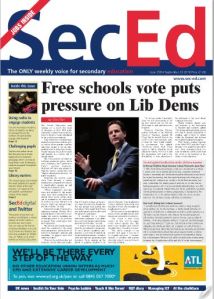
Today I have an article printed in Sec-Ed. Sec-Ed is the UK’s only free national education paper that is sent to every school every week. I am a massive fan of this paper and love to read the stories and articles that appear every week. I have been lucky to have had some articles printed by Sec-Ed over the last two years. The article was based on the idea of ‘what tools does a teacher need?’ This was quite tricky as we all have different ideas but I hope you get the idea!

I really enjoy sharing ideas with other practitioners and learning a new technique or way of doing something. Sometimes we are left to our own devices and perhaps we should be talking and sharing resources more often.

The main tools I focused on were;

  • Blogs
  • Working as a team
  • Thinking outside the box
  • Enjoy your lessons
  • Assessment for Learning (Afl)
  • Reflective teaching

The full article can be accessed here. I hope you enjoy the read! Many thanks to Pete Henshaw, Editor of Sec-Ed, once again for printing my article – cheers!

Goodbye 2010, and hello 2011

Wow! A new term and a new year, 2011, bring it on! 
For those of you who have not read my blog, my name is Mike Tidd. I am the Head of Geography at Gillingham School in Dorset. I have been a teacher for most of my working life and I immensely enjoy my role as a teacher. I have a deep interest in education developments and I am motivated to help my fellow practitioners and students to achieve their potential.

Over the past two weeks I have had a chance to reflect back on a very eventful year. As I get older I seem to find the years do get faster and I sometimes find it hard to pack everything in I would like to. 2010 was my first year as a blogger on the blogosphere. I started one year ago as a new writer in a cyber world I was not always sure about. Creating my own web site has given me the chance to improve my IT skills and look at the wealth of knowledge out there. This has helped improve my knowledge, understanding and my teaching.

I started my second year at Gillingham School in Dorset in September as Head of Geography. I have been lucky enough to work with a very dedicated department whose enthusiasm remains high. They have been a great bunch of geographers to work with (yes, all seven of you!). Our results last summer were exceptional and is a reflection of the hard work of the geography teachers and the students efforts – well done to everyone!

2010 was also a year of field trips. Fieldtrips, in my opinion, are an integral part of geography. We are very lucky at Gillingham School that we have a Senior Management Team that also see the benefits of field trips. The year 7’s went to Stourhead as part of the Lavlantic Cup Challenge developing their map skills through orienteering. The Year 8’s had the opportunity to go the Brecon Beacons for some glacial geography and GIS fieldwork techniques. The year 9’s went to Marwell Zoo for sustainable and ecological learning. The year 11’s went to Lyme Regis for coastal erosion, deposition and management as part of their controlled assessment. And finally, year 12 went to Barcelona looking at urban and rural rebranding and extreme weather. Lots of planning but it’s what makes geography so special!

Now that 2010 is gone, what will 2011 bring Mike Tidd?

Controlled Assessments


With a new curriculum and syllabus I will be taking much interest in the results of our controlled assessments. I have written previously about my thoughts and feelings towards this type of assessment. From doing our first controlled assessment last term we have learnt many things we would better next time to improve the student’s experience. With other subject areas doing controlled assessments there has been a huge pressure on the students. They do seem to be on an endless cycle of exams over four years if they continue into A’Level. The jury, in my opinion, is still out on the changes that have been made with the syllabus changes. 

Fieldtrips
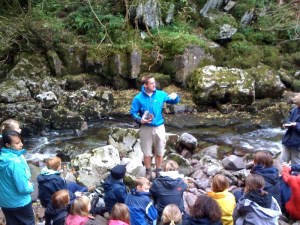
This year my Department will be creating and developing a trial controlled assessment for Year 9. We feel the students need to develop the skills we require at KS4 and beyond. A GCSE style field trip would offer the students the skills needed and the experience of completing a GCSE piece of work.  As a geography teacher I am very much in favor of field trips. Firstly, they enhance the student’s experience fo the subject by reinforcing their learning and understanding within the classroom. Secondly, it further develops the students as young adults. Fieldtrips do offer students an experience where they can develop their individual and team work skills. 

Key Stage 4 Changes 
Now that we are going into the second year of the new GCSE, we shall continue to tweak and make changes to our curriculum. Now that we are completing our second year of the GCSE curriculum we have a much better understanding the requirements of the exam and what our students need to achieve to gain their grades.

Development and whole scale overhaul of KS3

With the new curriculum at Key Stage 4 and 5, Key Stage 3 must be a priority in the up coming year. We do seem to be on a continuous cycle of rewriting, but we must not forget the building blocks of a successful education. Key Stage 3 can be sometimes be forgotten about in this world of examinations at KS4 and 5. The young students at KS3 need the skills and knowledge to help them in their later geography education. 

Mentoring New Teachers


I would like to see the department become a centre for new geography teachers to learn their craft. I feel we have a wide variety of teachers and expertise that would help any new teacher. This is an area I would really like to start occurring this year at some point.

Personally, I would like to continue to develop as a geography teacher. I know my strengths and weaknesses and appreciate I am far from the finished article. Teaching is a career where you can always continue to develop as a practitioner. I will continue to write about my experiences along with my thoughts and feelings on the education developments that occur as the year goes on.

Geography is the subject of the 21st century and I hope to hear from you all at some point during the year.
‘Geography Teachers Are World’s Best’

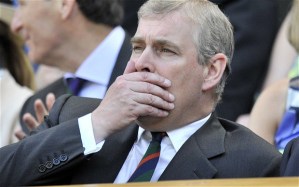
Having just returned from Barcelona I am catching up on the news and I was delighted to see Geography Teachers gaining praise by Prince Andrew. This has come out due to the recent WikiLeaks. Geography has been always been something of a Royal subject with Prince William having recently studying the subject at St. Andrew’s University. For the full report please follow the link here. Just out of interest, does that mean I have a chance of being Knighted?

Barcelona 2010

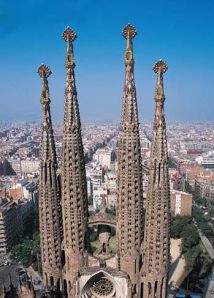
This year I have had the chance to organise the A’Level field trip to Barcelona. I have organised many field trips over the years but this was my first overseas trip. At Gillingham School the Geography Department have been going to Barcelona for the last twelve years with much success. Initially it was quite daunting planning a trip overseas but I have had much help and guidance for which I am especially grateful for – thank you team!

For our A’Level the students are requested to undertake several days fieldwork which they are assessed for in January as part of an examination. Our focus for the trip was rebranding and extreme weather. Going to Barcelona lets us complete all these topics and at a much cheaper cost compared to the UK. We also complete our fieldwork with the Barcelona Field Studies Centre who are very experienced team of geographers run by Derek Geary.

Day one consists of an orientation tour of Barcelona city and a pre-fieldwork session outling the field trip.

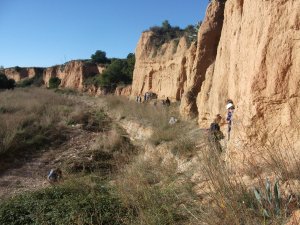
Day two is primarily the extreme weather day focusing on flash flooding at the River Ribes.

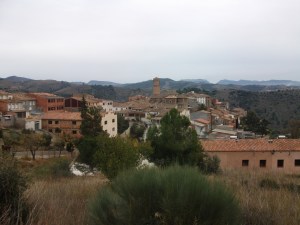
Day three is the rural rebranding day in the Priorat region of Spain looking at the success of the wine industry.

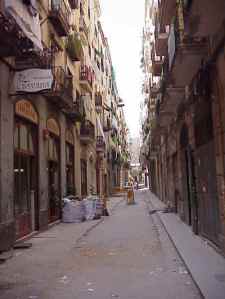
Day Four is the urban rebranding day in El Raval looking at the success of the flagship development projects.  

After each day the students work extremely hard on looking at and evaluating their methods, results and conclusions. Well done and thank you to everyone involved – you were all brilliant!

London Futures

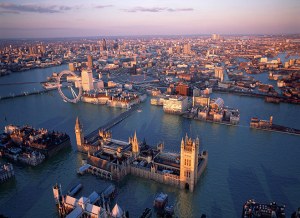
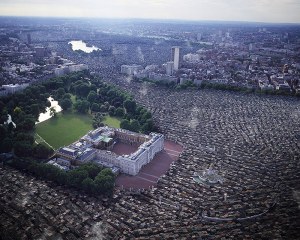
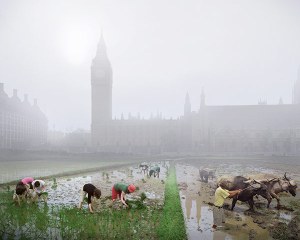
A new exhibition to illustrate London’s  landmarks in an environment transformed by climate change, is being held at the Museum of London. The photographs have been digitally changed by illustrators Robert Graves and Didier Madoc-Jones. The display shows the full impact of global warning, food scarcity, rising sea levels and how people will need to survive and adapt for the future. The exhibition is running from now till March 2011.


GIS for Beginners

With the new Controlled Assessments for GCSE it has highlighted that Geographic Information Systems (GIS) must be used in the students work. This has made it necessary that every member of a Geography Department has an awareness of GIS and that students need to develop their skills from an early age. With this in mind the Geographical Association has put together a series of two-day training courses aimed at geography teachers who are new to GIS. 

A geographic information system (GIS) integrates hardware, software, and data for capturing, managing, analysing, and displaying all forms of geographically referenced information. GIS allows us to view, understand, question, interpret, and visualize data in many ways that reveal relationships, patterns, and trends in the form of maps, globes, reports, and charts. A GIS helps you answer questions and solve problems by looking at your data in a way that is quickly understood and easily shared.

The following information is from the Geographical Association website which outlines The GIS for Beginners course;

  • Day one: After a brief overview of GIS, you will develop basic GIS skills through hands-on practical exercises and case studies. This will help you to create a GIS resource for your school. Through a myGIS practical activity you will be introduced to the main functions of DigitalWorlds. You will also look at GIS in the curriculum/exam specifications.
  • Back in the classroom: Over the next few weeks you will put your GIS skills into practice using your ESRI(UK) software.
  • Day two: An opportunity for feedback and reflection before progressing on to more advanced GIS skills.

Course aims and outcomes

  • To outline the difference between visualisation and GIS and develop both basic and more advanced skills using DigitalWorlds software
  • To increase familiarity with DigitalWorlds software, and the way that it can be used in geographical enquiries and Controlled Assessment tasks
  • To allow time for school-based reflection and development of GIS in the curriculum
  • To introduce delegates to the online community of GIS users and additional sources of ongoing support
  • To provide ideas for using GIS at KS3, and to supplement Controlled Assessment tasks at GCSE
  • To provide examples of places to find further data and mapping, and ongoing support for your professional development
  • To gain confidence with DigitalWorlds software, to be able to use it with students, and develop enquiry sequences which are engaging and relevant to individual school contexts
  • To become familiar with some more advanced GIS skills

This sounds a great opportunity for Geography Departments across the country to develop and improve the GIS that is currently being taught giving the students the best opportunities on developing the necessary skills to gain their top grades. The Geographical Association are brilliant at delivering these course. If you are interested or want to know more please follow the link here. I know we will be booking one of these courses at Gillingham!

Classroom Antics

What are the tools and key things a teacher needs?

This was a question I posed last week on my blog. It is quite tricky as every teacher has different views on what they need to be successful and to help their everyday lives. So I have come up with my own list. Enjoy!

  • Blogs

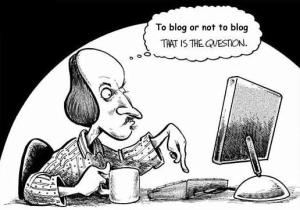
For the last few years I have found blogs a great source to further my understanding and learn new skills as a teacher. I have always said that a teacher never stops learning. Just like our students we as teaching practitioners are constantly learning new techniques on improving our methods we use in the classroom. This is part of the reason why I love teaching, it is never dull and is a challenge I relish on a daily basis. Out on the ‘Blogosphere’ are some brilliant writers who share their teaching experiences, daily routines, ideas, schemes of work, lessons…you name it and teachers are writing about it! Reading about someone elses experience can create and add to your armoury of activities. Some of the best writers out there are Ollie Bray, Dave Rogers and Alan Parkinson who I wholly recommend on reading.

  •  Google Earth/Google Maps

As a geographer Google Earth and Google Maps have the best free Geographical Information Systems (GIS) software available. For students who need to include GIS in their coursework at Key Stage 4 and 5, this is the best start and easiest solution. Most students have access in some format to a computer and Google Earth/Google Maps can be used from a very early age giving them the skills and presentation techniques they need later on in their school career. Simple activities like spinning the globe round or locating places in the world from your location can make a young person make a sense of their place in the world.

  • Working as a Team

Teaching can sometimes be a lonely job, with yourself up against thirty students challenging you. It can sometimes feel you are the Lone Ranger but that is not so. Using people around you can make your life much easier especially when you need help or guidance. For a young teacher this is possibly the best tip I can pass on…talk to those around you. I have worked in some great Departments where working together and sharing ideas/work loads makes everybody feel important and better about themselves. The success of a Department should improve too with more minds working together then one. The work – life balance is very important and should never be forgotten! 

  • Thinking Outside the Box

Being innovative and brave within a classroom can bring enjoyment, success and respect. I admit not every idea I have tried has worked but those that do can enhance the student’s experience of your subject. Trialling new ideas improve your lessons and enjoyment as a teacher. It is not always easy trying out new ideas. It is very easy to stay in the comfort zone but without trying out new ideas we do not develop ourselves as teachers and will not improve.

  • Enjoy your lessons

As teachers we work long hours and spend many lessons preparing and planning work. We have the aim of teaching the National Curriculum and working with our students on achieving their personal best and gaining the grades they deserve. But…we must enjoy our working life. There are many pressures in the education industry and targets to achieve. Teaching in my opinion is the greatest role in life that someone can do. To actually see the look of wonder and understanding on someone’s face is something that cannot be bought. To pass on knowledge and see where it takes a young person in life is amazing. To actually help young people in life choose a path in the life with your encouragement and guidance is breathtaking. There is much to enjoy from teaching, just don’t forget the positives!

Teacher Tools

With the new term fast approaching, I have started preparing for my new classes and aims for the year. Before the summer break I outlined my five objectives for the year ahead and wrote about them on my blog back in May. These were:

  • Teaching & Learning
  • Assessment for Learning
  • Reflective Teaching (including observations)
  • Technology
  • International link with a school abroad and feeder schools

With these five objectives in mind it has got me thinking what are the most important tools to achieve this? What do we need as teachers on a day-to-day basis? What are the best web pages/blogs for guidance? What tools can we do without to teach? I will be putting my list together on the next few days, but I would like to hear your views and share them.