
Choose teaching – be a teacher

‘It isn’t what you say that defines you but what you do’

These are the wise words of Batman that every aspirational teacher should know.

Teaching is a popular profession for many graduates. Last year 16, 845 people completed a secondary PGCE. The number of graduates completing PGCE’s has steadily risen over the last few years. It is a role that people find exciting, challenging and extremely stimulating. It is a profession where we are able to move people forward in their aspirations and assist their learning.

Unfortunately, I was sad to read earlier this year that the number of teacher training places at universities and colleges is to be cut by one fifth. The Coalition wants more teachers to learn their skills on the job in schools rather than in training colleges. Now I agree that we should have more on the job training – it’s where I learnt my skills and it was where I did most of my learning– but fewer teachers and training opportunities? Universities and teaching colleges offer fantastic teaching expertise and facilities that should be further funded. This maybe in response to subject demand but I am sure we will need teachers in the future and these cuts maybe putting off hundreds of potential brilliant teachers.
Nicholas Hargreaves of Radipole School, Weymouth says, ‘teaching is a wonderful career choice for anyone. From a young age several teachers and friends helped and encouraged me to aspire to become a teacher. To provide young minds with the knowledge, skills and passion to take control of their lives and become the experts of tomorrow. Personally it has given me the chance to inspire young people with my knowledge and expertise. Working with a group of like-minded teachers and young people is extremely inspirational. It is a role I have always been determined to succeed in and work hard for.’

The role teachers’ play in their local community is also central to a student’s development. Schools’ and communities must work collaboratively together for an area to benefit. Economic investment is a necessity with schools. Schools are the training ground for our future generations and they need to be at the forefront of technology for our young learners with the very best facilities for them to achieve their potential. The local community and schools’ must be incorporated into working together to create an ethos of self belief and to achieving their personal best. The community must be involved in their local schools creating community centres, so local people can benefit from the facilities and technology a school has. A community that sees the benefit of an education can help generate our leaders of tomorrow but they must work in partnership with the local schools. We as teachers are the facilitator of this role and can help enrich a wide variety of lives in the process. Working with the local community to enhance the school ethos and help an area develop.
Russell Wait, Curriculum Leader of Global Studies at Cove School, Hampshire; ‘I was inspired by my secondary school Headteacher who encouraged me from the tender age of 12 to reach my aspirations and goals. I find that teaching is an ever-changing occupation that keeps you on your toes. To teach the future generation of Britain with a passionate voice can create change and can only be a benefit for the country’.

Many professionals from industry are turning to a career in teaching because of the many benefits the role brings. They bring with them a vast range of experiences from industry that can only enhance the profession. Experience from outside the classroom and shared with the students is vital. Young people do need to have role models and even though they sometimes might not want to admit it, teachers are a very important one. It is very clear that many people want to train as teachers but cannot afford to take a whole year off for training. With the recent credit crisis it is understandable, but it does show that people do want to be teachers.

With this in mind, young people choosing to become a teacher may not get a job at the end of their training. If the government get their way we will all be working till at least sixty-eight – where is the opportunity for the young, fresh and talented teachers? We need teachers, inspirational teachers with new ideas and outlooks. Choose teaching – be a teacher!

Tidd News II

I have found this half-term has flown by at an incredible rate. Our students at Gillingham School have worked tirelessly with so many achieiving top grades. Personally, it has been my aim this year to make our geography lessons as fun as possible. I hope my classes are enjoying my lessons as much as I am. We have completely re-written Key Stage 3 with a bigger emphasis on the ‘fun factor’.

With this in mind my brilliant (and inspiritional) Year 13 class have been taking their learning to the extreme. Everyone of them in the class are pushing for the highest grade they can obtain and are working at a very high level which I hope they are proud of. With this in mind another edition of Tidd News has been produced. Our ever expanding films of geography will be a great geography revision resource with a touch of humour. Thank you to Olly Cooper, Alex Ross and Will Horner for all their hard work producing these films!

Tidd News

The term has been flying past at a super fast rate that it has taking me some time to start blogging again. I have really enjoyed the start of the year so far – there really does feel a buzz up in Geography department with all the many changes we have done to Key Stage 3 and the brilliant work all our students have been producing.

With that in mind, my Year 13 class have been working on some presentations regarding food supply problems around the world. As always they were all excellent so I thought I would include one of the them for you to look at by Olly, Alex and Will – well done chaps and enjoy!

Geography Revolution

The primary target for improvement this year revolves around teaching & learning within Geography. We are proud of Geography’s achievements over the years at Gillingham School but we do not want to be complacent. We must focus on our own teaching and how the students learn. As a Department we want to teach the best we can and we are looking at Key Stage 3 lessons seeing where we can make improvements and implementing new teaching strategies. We must make the teaching experience more personal for the students and improve their independent study skills. This is being developed from KS3 onwards and carried on into KS4 and KS5.

The curriculum map we have designed, seen below, is set in a specific way. Most importantly it allows students to follow a natural progression building up skills and using them in a number of different ways. The progression also leads through to Key Stage 5. We are aiming to promote progression in a number of ways;

  • Depth of knowledge
  • Breadth of study
  • Complexity of concepts
  • Independent learning and research
  • An increase in spatial scale

Progression is mainly achieved through deeper understanding and increasing complexity of tasks.  There is also a broadening of the breadth of study.  More explicitly we are looking at increasing spatial scale, increasing awareness of society, economy and the environment. Work is currently being undertaken to ensure that there is smooth progression from KS2 to KS3 and also from KS4 to KS 5.

Year
7

Year
8

Year
9

  • Rainforest
  • Map work
  • Hazards 1 – volcanoes & earthquakes
  • Crime
  • Olympics
  • Tribes & Cultures
  • Population
  • Geographical research
  • Deserts
  • Shanty towns
  • Rivers
  • Feeding the world
  • Hazards 2 – extreme weather
  • Energy
  • Ice Age
  • Geographical research
  • Hazards 3 – tsunami
  • Why is Africa disconnected?
  • Climate change
  • Chindia
  • Coral reefs
  • Waste
  • Coasts
  • Geographical research
  • Stourhead
  • School based fieldwork
  • Disaster Management Day
  • Brecon Beacons


With the new curriculum at Key Stage 4 and 5, Key Stage 3 is a priority this year. We must not forget that KS3 is the building blocks of a successful education. Key Stage 3 can be sometimes be forgotten about in this world of examinations at KS4 and 5. The young students at KS3 need the skills and knowledge to help them in their later geography education. We are currently devising eight topics containing eight lessons for each year group. This would enable free time for us to look at world events that take place i.e. Geography Awareness Week, Fairtrade Fortnight, Japanese earthquake etc. This new format and the topics decided upon can be seen in the table above.

We are entering a very exciting time at Gillingham School where we are creating an innovative and inspirational curriculum for our students. I will keep you all posted how our plans, successes and failures go as the year goes on. My department has been working really hard on these lessons and I am 100% happy with what has been planned so far – well done team, you have been brilliant!

@tiddtalk on Twitter

After many months of deliberating I have joined Twitter. I have been in two minds about Twitter for a long time trying to see its value in today’s society. Two weeks ago I took the plunge and I have so far been very impressed.

Twitter is brilliant for networking – linking up with fellow practitioners across the globe. This can enable you to spread information very quickly on what is happening now or a particular moment. It is an excellent resource to spread information especially if you have updated your blog and are looking for instant readership.

My good friend Ollie Bray, National Adviser for Learning and Technology Futures at Learning & Teaching Scotland (LTS),  is a huge fan and has been a major persuading factor in me joining Twitter. It is a useful tool for when you are looking for ideas or wanting to pick someone’s brain – and it doesn’t have to be someone you know.

Paul Ainsworth, a Vice Principle of a school in Leicestershire, wrote a brilliant article on the day I joined Twitter in Sec-Ed. It was very thought provoking and backed up my decision to join Twitter, thanks Paul! Paul explained that Twitter is a virtual staffroom where upon you can draw information and advice from a wide pool of practitioners across the globe. This is a very useful tool as we do need to share knowledge and advice. I recommend anyone thinking about joining a social networking site to read this article.

My Twitter account username is @tiddtalk – join me sharing information about education and geography. PLS RT

Education Blog Award Winners


And the winner is…?

Yes, today we find out who are the winners of the UK Education Blog Awards. The awards are split between four categories;

Last month we found out who were the ten shortlisted blogs for each category from over three hundred nominated. I was extremely proud to be nominated and then shortlisted for two awards; Most Influential Blog of the Year and Teacher Blog of the Year.

Thank you to Scholastic Education, Creative Blogs and Primary Blogger for sponsoring the awards this year.

Every edublogger has been blogging away in anticipation. But who has won? Click here to find out! Well done to all the education bloggers in the blogosphere – keep up the good work!

Teaching Challenge (5/5)

As teachers we must be more reflective of our own practice and make amendments where we need to. We must utilise our strengths and work on our areas of development. Observations are vitally important to watch other teachers and how students learn. This would be ideally done within the department and with other departments once a term where possible. This should therefore improve our own teaching and benefit the students. Working with other colleagues will help develop cross curricular opportunities to raise achievement throughout the school.

Teaching Challenge (4/5)

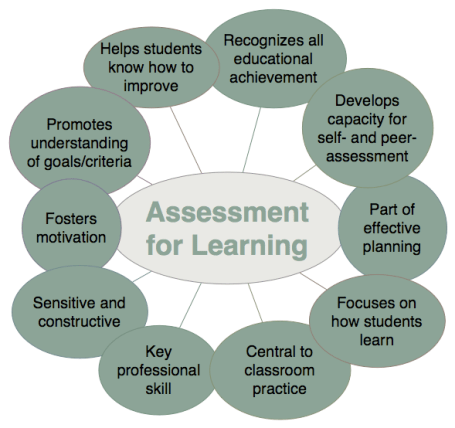
4. Assessment for Learning (AFL)

AFL is a very important skill and is an area where we could develop within Geography. As teachers we are sometimes too controlling and we must put the onus back on the students for them to achieve. Investigating methods and ways of implementing this into our schemes of work must be one of our priorities. This will encourage student learning and raise achievement across all year groups.

AFL will also help improve the student’s knowledge of using a mark scheme and what to include in a good answer. This will reduce our marking and in the long-term our workload.

Teaching Challenge (3/5)

3. Technology

Geography has prided itself on using technology where possible to improve our lessons and the student experience. We would like to incorporate electronically submitted assessments, Podcasts and revision tools into our schemes of work. The VLE is a huge potential as revision resource. This has the opportunity to encourage our disaffected boys at KS4 and KS5 who are underachieving compared with the girls.

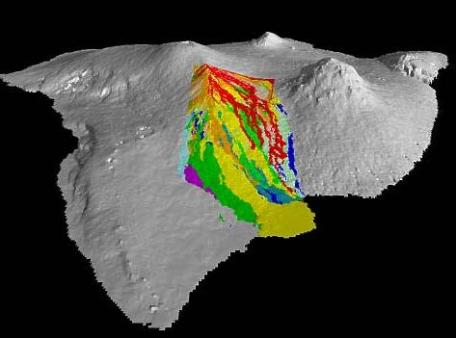
With the new syllabus changes at GCSE and A level a key skill that needs to be developed is the use of Geographical Information Systems (GIS). GIS must be developed within the Department across all year groups. Along with these ideas should be the development and use of mobile phones.

The intrusive ringing and sounds of a mobile phone maybe the future of education. This is a very bold statement for a teacher to make. In the majority of schools, mobile phones are banned, but that maybe changing across the country. Mobile phones are an untouched resource that could be more of a help then a hinderance.

The technology available to us as teachers is immense and is changing at a rate faster than we are able to keep up with. Students and pupils are far and away ahead of us as teachers when it comes to technology. As a teacher we are forever changing our teaching methods and resources. Mobile phones could help enrich a subject and make it more widely available for all students to participate. Mobile phones have so much potential for the classroom. They will enhance a students learning. They will give students skills that they will use in the wider world. They will bring benefits that will develop our teaching.

Teaching Challenge (2/5)

2. Developing Key Stage 3

With an ever-changing world, it is time for our Geography curriculum to change. Since joining Gillingham School in September 2009, we have rewritten the GCSE course and made amendments to the A Level course. Now that they are finally in place we can turn our attention to Key Stage 3.

Key Stage 3 is the building block of geography within every secondary school. It is where some students are only just learning the subject for the first time and building upon the foundations of their learning at KS2. We are turning KS3 upside down on its head at Gillingham and shaking it for the first time in several years. We already have a large uptake at GCSE and the students enjoy their lessons. We it is time for a change, to gain the skills and knowledge required at KS4 and beyond, a new layout must be put in place.

Currently we teach five/six topics across each year group. With students becoming more interactive and demanding more knowledge, we have decided to go for a format of eight separate topics of eight lessons each. We currently teach four lessons over a two-week timetable. This means topics will interchange at a fast rate, we won’t get bogged down in one topics and it keeps it exciting for the students.

We do seem to be on a continuous cycle of rewriting, but we must not forget the building blocks of a successful education. Key Stage 3 can be sometimes be forgotten about in this world of examinations at KS4 and 5. The young students at KS3 need the skills and knowledge to help them in their later geography education. It also means we can dip out of the curriculum when we need to – eight topics x four weeks = 32 weeks out of 39 teaching weeks. This would enable free time for us to look at world events that take place i.e. Geography Awareness Week, Fairtrade Fortnight, Japanese earthquake etc. The topics we have discussed so far have been using some of the current lessons and new ideas we are developing.