
GIS for Beginners

With the new Controlled Assessments for GCSE it has highlighted that Geographic Information Systems (GIS) must be used in the students work. This has made it necessary that every member of a Geography Department has an awareness of GIS and that students need to develop their skills from an early age. With this in mind the Geographical Association has put together a series of two-day training courses aimed at geography teachers who are new to GIS. 

A geographic information system (GIS) integrates hardware, software, and data for capturing, managing, analysing, and displaying all forms of geographically referenced information. GIS allows us to view, understand, question, interpret, and visualize data in many ways that reveal relationships, patterns, and trends in the form of maps, globes, reports, and charts. A GIS helps you answer questions and solve problems by looking at your data in a way that is quickly understood and easily shared.
The following information is from the Geographical Association website which outlines The GIS for Beginners course;

  • Day one: After a brief overview of GIS, you will develop basic GIS skills through hands-on practical exercises and case studies. This will help you to create a GIS resource for your school. Through a myGIS practical activity you will be introduced to the main functions of DigitalWorlds. You will also look at GIS in the curriculum/exam specifications.
  • Back in the classroom: Over the next few weeks you will put your GIS skills into practice using your ESRI(UK) software.
  • Day two: An opportunity for feedback and reflection before progressing on to more advanced GIS skills.

Course aims and outcomes

  • To outline the difference between visualisation and GIS and develop both basic and more advanced skills using DigitalWorlds software
  • To increase familiarity with DigitalWorlds software, and the way that it can be used in geographical enquiries and Controlled Assessment tasks
  • To allow time for school-based reflection and development of GIS in the curriculum
  • To introduce delegates to the online community of GIS users and additional sources of ongoing support
  • To provide ideas for using GIS at KS3, and to supplement Controlled Assessment tasks at GCSE
  • To provide examples of places to find further data and mapping, and ongoing support for your professional development
  • To gain confidence with DigitalWorlds software, to be able to use it with students, and develop enquiry sequences which are engaging and relevant to individual school contexts
  • To become familiar with some more advanced GIS skills

This sounds a great opportunity for Geography Departments across the country to develop and improve the GIS that is currently being taught giving the students the best opportunities on developing the necessary skills to gain their top grades. The Geographical Association are brilliant at delivering these course. If you are interested or want to know more please follow the link here. I know we will be booking one of these courses at Gillingham!
Classroom Antics

What are the tools and key things a teacher needs?

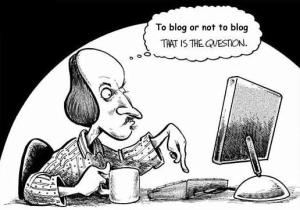
This was a question I posed last week on my blog. It is quite tricky as every teacher has different views on what they need to be successful and to help their everyday lives. So I have come up with my own list. Enjoy!

  • Blogs

For the last few years I have found blogs a great source to further my understanding and learn new skills as a teacher. I have always said that a teacher never stops learning. Just like our students we as teaching practitioners are constantly learning new techniques on improving our methods we use in the classroom. This is part of the reason why I love teaching, it is never dull and is a challenge I relish on a daily basis. Out on the ‘Blogosphere’ are some brilliant writers who share their teaching experiences, daily routines, ideas, schemes of work, lessons…you name it and teachers are writing about it! Reading about someone elses experience can create and add to your armoury of activities. Some of the best writers out there are Ollie Bray, Dave Rogers and Alan Parkinson who I wholly recommend on reading.

  •  Google Earth/Google Maps

As a geographer Google Earth and Google Maps have the best free Geographical Information Systems (GIS) software available. For students who need to include GIS in their coursework at Key Stage 4 and 5, this is the best start and easiest solution. Most students have access in some format to a computer and Google Earth/Google Maps can be used from a very early age giving them the skills and presentation techniques they need later on in their school career. Simple activities like spinning the globe round or locating places in the world from your location can make a young person make a sense of their place in the world.

  • Working as a Team

Teaching can sometimes be a lonely job, with yourself up against thirty students challenging you. It can sometimes feel you are the Lone Ranger but that is not so. Using people around you can make your life much easier especially when you need help or guidance. For a young teacher this is possibly the best tip I can pass on…talk to those around you. I have worked in some great Departments where working together and sharing ideas/work loads makes everybody feel important and better about themselves. The success of a Department should improve too with more minds working together then one. The work – life balance is very important and should never be forgotten! 

  • Thinking Outside the Box

Being innovative and brave within a classroom can bring enjoyment, success and respect. I admit not every idea I have tried has worked but those that do can enhance the student’s experience of your subject. Trialling new ideas improve your lessons and enjoyment as a teacher. It is not always easy trying out new ideas. It is very easy to stay in the comfort zone but without trying out new ideas we do not develop ourselves as teachers and will not improve.

  • Enjoy your lessons

As teachers we work long hours and spend many lessons preparing and planning work. We have the aim of teaching the National Curriculum and working with our students on achieving their personal best and gaining the grades they deserve. But…we must enjoy our working life. There are many pressures in the education industry and targets to achieve. Teaching in my opinion is the greatest role in life that someone can do. To actually see the look of wonder and understanding on someone’s face is something that cannot be bought. To pass on knowledge and see where it takes a young person in life is amazing. To actually help young people in life choose a path in the life with your encouragement and guidance is breathtaking. There is much to enjoy from teaching, just don’t forget the positives!

Teacher Tools

With the new term fast approaching, I have started preparing for my new classes and aims for the year. Before the summer break I outlined my five objectives for the year ahead and wrote about them on my blog back in May. These were:

  • Teaching & Learning
  • Assessment for Learning
  • Reflective Teaching (including observations)
  • Technology
  • International link with a school abroad and feeder schools

With these five objectives in mind it has got me thinking what are the most important tools to achieve this? What do we need as teachers on a day-to-day basis? What are the best web pages/blogs for guidance? What tools can we do without to teach? I will be putting my list together on the next few days, but I would like to hear your views and share them.

Reflective Teaching

This year in education has been one of change and planning for the future. With the new GCSEs, AS/A2 curriculum changes it has given me much to think about since I joined Gillingham School in September 2009. Joining a very successful school and department I have had big shoes to fill, a challenge I have relished. I believe I have put in place the correct building blocks for the future. This month I have had a chance to look back and reflect upon our successes and future developments. For a successful department I believe you must not look at too many areas to change, focus, innovate or tweak. Geoff Barton, Headteacher of the King Edward XI School likened managing a large department to plate spinning, you have to be able to manage each of the areas you start to change – too many and the plates start crashing around you. Personally, a maximum of five strategies/innovations is perfect. Making sure your strategies are manageable and flexible you are able to keep a good grasp and move the strategies forward.

Idris Mootee, of  the innovation playground blog,  has said, ‘innovation is hard, it is not about getting the ideas at all, it is about managing ideas. So you have a few great ideas, so what? The future is never about the future but now.’

The five strategies we will be focusing on are outlined below:

  • Teaching & learning

The primary target for improvement this year revolves around teaching & learning within Geography. As a Department we want to teach the best we can and we are looking at our lessons and seeing where we can make improvements and implementing new teaching strategies. We must make our teaching experience more personal for the students and improve their independent study skills. This must be developed from KS3 onwards and carried on within the school.

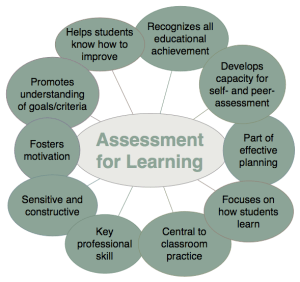
  • Assessment for Learning

AFL is a very important skill and is an area where we could develop within Geography. As teachers we are sometimes too controlling and we must put the onus back on the students for them to achieve. Investigating methods and ways of implementing this into our schemes of work must be one of our priorities. This will encourage student learning and raise achievement across all year groups. AFL will also help improve the student’s knowledge of using a mark scheme and what to include in a good answer. This will reduce our marking and in the long-term our workload.

  • Reflective Teaching (including observations)

As teachers we must be more reflective of our own practice and make amendments where we need to. We must utilise our strengths and work on our areas of development. Observations are vitally important to watch other teachers and how students learn. This would be ideally done within the Department and with other Departments once a term where possible. This should therefore improve our own teaching and benefit the students .Working with other colleagues will help develop cross curricular opportunities to raise achievement throughout the school.

  • Technology

Geography has prided itself on using technology where possible to improve our lessons and the student experience. This needs to be further developed to further enhance our learning and the students. GIS must be developed within the Department across all year groups.

  • International link with a school abroad and feeder schools

As part of our role in the local and global community we would be looking to develop a link with a school abroad. This would develop our student’s knowledge of their role within a global community and understanding of issues that occur worldwide.

Locally we would like to work with the feeder schools on developing our link and improving geography. This would enhance geography’s status and develop their geographical knowledge. Geography is sometimes not always taught in primary schools to a high level and we would like to develop this to help their progression and achievement later on.

Please get in contact regarding what your departments/schools are planning/changing for the future…I would love to hear them especially in these uncertain times with possible budget/curriculum changes.

Raising Your Game – Improving Your Subject Area

Last week I attended a course run by ASCL Management and Professional Services in London. The course focused upon what subject leaders can do to improve the quality of teaching and learning in their subject area. It provided a coherent insight and practical approach to improving the performance of colleagues, which will help raise the pupils’ achievement in your department.

The aims and objectives of the day were:

  • to help improve learning and teaching in your subject area
  • to become familair with improvement strategies
  • to help integrate the improvment process
  • to understand ‘what effective teaching and learning looks like’
  • to develop skills to carry out effective lesson observations
  • to develop the skills of giving effective feedback and resolving conflict

The course was run by Geoff Barton, Headteacher at King Edward VI School in Suffolk and Peter Richards, a qualified SIP, teaching consultant and former Headteacher.

I found the course a great success and found both Geoff and Peter realists as professional teachers. They knew the rhetroric of being a successful subject leader and the reality. They were able to explain things very clearly and efficiently. The key question they kept referring to was; ‘Would you be happy for your child to be taught in the classroom?’. This was a brilliant way to question whether we were doing the right thing within our own subject areas.

It was clear by the end of the day that the five most important skills a great subject leader needs to develop were;

  • being visible,
  • optimistic,
  • working hard,
  • hungry for success
  • and resilient.

I could not argue with their thoughts and feeling throughout the day and found them brilliant speakers. It was an excellent course where I came away knowing more than before I went in. Both Geoff and Peter did try to link the course to Ofsted and what they were looking for as inspectors. For more information regarding the course please go to the ASCL website or Geoff Barton’s website.

From Slumdog to IT Surfer

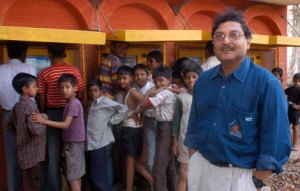
The Guardian newspaper yesterday wrote a brilliant article in its education supplement about Professor Sugata Mitra. It was a follow-up on to an article written last year on Mitra’s Hole In The Wall learning project. The project itself was about installing computers with internet connection in Delhi slums for local children to discover. The project discovered that the children began to teach themselves English, computing and maths. This was all in a month after installing the computers. It was from this that inspired Vikus Swarup to write Q&A, the book that became the film Slumdog Millionaire.

The project was a success and over five hundred computers can be found in walls across India and Africa. Mitra is now a professor at Newcastle University and is working on a new project in the UK, where is helping youngsters use computers to carry out ‘self-activated learning’ in the classroom.

According to Mitra, ‘having watched hundreds of Indian children learning without teachers at the Hole In The Wall computers…children can work by themselves, if they want to.’

‘Most British children grow up with the internet and the means to learn what they want in minutes, and this challenges the traditional idea of school being about learning things that will come in handy in the future. They become disengaged.’

‘If you encourage individual learning, and give children interesting questions to look independently, the learning process is sparked by curiosity.’

Mitra is currently working with some schools in Tyneside where is challenging primary school children with GCSE questions. The children are able to choose which question they would like to research and they are able to use computers freely within the room. The results are very impressive according to the teachers at the schools concerned. Three months after the project the pupil’s knowledge and learning had improved from the tests given. 

It is a very interesting and thought-provoking article and I recommend all teachers to read it. The link to the article can be found hereMitra has plans to develop autonomous learning within all schools. It is a fantastic project that could improve a pupils’ learning and knowledge and possibly make learning fun for all! Perhaps the developed world can learn new ways of teaching from developing countries. As Henry Ford once said, ‘all of us are smarter than one of us’.

Plymouth University e-Learning Conference 8-9th April

My old university is holding it’s 5th e-Learning Conference. This year they will examine the theme of e-learning in a time of change, and will challenge notions of traditional boundaries, learning spaces and roles. The conference will focus on new practices, new technologies, new environments and new learning. The conference is taking place on Thursday 8th and friday 9th April.

The Plymouth e-Learning Conference is jointly organised by the Faculty of Education and EDaLT (Educational Development and Learning Technologies) at the University of Plymouth.

At the conference two keynote speakers will be attending; Josie Fraser and Donald Clark. Josie Fraser is well known in the field of social media and learning, and writes regularly about her research on her blog SocialTech. Josie spreads her time and energy across a wide variety of social media/networking spaces, where she can be found experimenting with all manner of emerging technologies. At the ALT-C 2008 Conference, she received the prestigious Learning Technologist of the Year award and continues to be at the forefront of learning technology development.

Donald Clark was CEO and one of the original founders of Epic Group plc, which established itself as the leading company in the UK e-learning market. He is now a board member of Ufi (LearnDirect), LINE Communications, Caspian Learning, Brighton Festival, and a school governor. He has produced over 40 papers, dozens of book reviews and many articles on e-learning. Donald has also won many awards for the design and implementation of e-learning, notably the ‘Outstanding Achievement in e-learning Award’.

It looks like a cracking conference and I look forward to hearing the thoughts and feelings that come out of it.

Personal, Learning & Thinking Skills

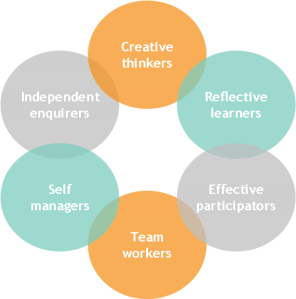
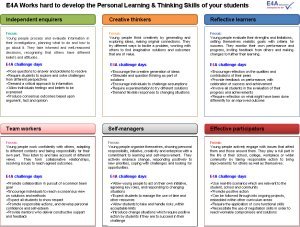
I am slowly catching up with my blogs at the moment as it seems to be a very busy term so far. Recently I went on a course run by Dorset County Council. This was my first course in my new county having previously worked in Hampshire and Surrey. The course itself was based on ‘Focusing on Skills in Foundation Subjects’ particularly personal, learning and thinking skills and run by Katie Ashcroft, Foundation Subjects Consultant. Personal learning and thinking skills (PLTS), together with functional English, mathematics, and ICT, cover the areas of competence that are most often demanded by employers. Integrating these skills into the curriculum and qualifications will provide learners with a platform for employability and further learning. PLTS involve:

  • team working
  • independent enquiry
  • self-management
  • reflective learning
  • effective participation
  • creative thinking.

The course itself was split into three sessions;

  • Session 1 – Developing pupils’ independent enquiry skills
  • Session 2 – Developing pupils’ team work skills
  • Session 3 – Developing a cross-curricular approach in foundation subjects

It is was a very informative and enjoyable course. It was great that they re-emphasised the importance of PLTS in lessons. PLTS help prepare pupils for the future, in and out of school. They develop the essential skills and qualities for to be a life long learner, life and future employment. They also provide a common focus for learning across subjects and provides great opportunities for cross curricular collaboration. PLTS use functional, transferable and creative skills which can be applied to real life scenarios.

It was pleasing to be given the opportunity during the course to identify the skills our department might want to develop in geography and reflect. With the new GCSEs and A’Level syallbus’ this course has come at a good time for reviewing the schemes of work we have developed so far and want to develop in the future. As teachers we sometimes forget about the skills the pupils require and focus on the content we need to teach. It has to be a balance of both and is something we feel at Gillingham we are achieving. It is also vitally very important that the pupils are clear about the skills they need to be successful in your subject area.

There was particular emphasis on cross curricular links and their importance within schools. This is a requirement within the new Secondary Curriculum for all subjects to explore connections with other subjects. Cross-curricular links provide a more coherent and relevant experience for the learner. It enables all pupils to understand the importance of different subjects and in helping them make a sense of the world. It provides pupils with the opportunity to apply the knowledge, understanding and skills they have acquired in one subject to a different context. For those of you investigating to develop cross-curricular links I recommend looking at the subject comparison web-page provided by the National Curriculum, which can be accessed here.  

The course linked the theory of skills to what Ofsted are looking for within schools. This is key for any school to have an awareness of what Ofsted expect from us as practitioners. I have quoted below Ofsted’s expectations;

‘The school’s curriculum provides memorable experiences and rich opportunities for high-quality learning…The school may be at the forefront of successful, innovative curriculum design in some areas…A curriculum with overall breath and balance provides pupils with their full entitlement and is customised to meet the changing needs of individuals and groups…Cross-curricular provision…is mainly outstanding and there is nothing less than good. As a result, all groups of pupils benefit from a highly coherent and relevant curriculum which promotes outstanding outcomes.’

These are skills I feel all schools’ are trying to achieve. Unfortunately, they do not happen over night and they do take time to develop and integrate in the school community. By sharing good practice, an understanding of what we want to achieve and hard work these skills will start to appear in all schools.

Rockin’ All Over the World

In my lessons I always plan to include a variety of activities, different learning approaches and trialling out new ideas to help the students’ understanding and enjoyment of the subject. Music can entice a young person’s mind and start to make them think. Thinking skills are vital in education. Young people need to develop their thinking skills. Music works on many levels and can attract many different types of learners. It can spark their interest or reinforce their learning and make them more inquisitive. Music appeals to the auditory learner. Sections, lines or quotes could all be used to help a young person gain an understanding of a story, case study or theory. It is also a great cross-curricular way of working with another department. For example, your music department might be teaching South American music whilst in geography you teach Brazil. Simple, but effective!

I remember one of my geography teachers playing Dire Straits’ ‘Telegraph Road’ to us to help us with settlement change. As a guitarist I love Dire Straits and was immediately hooked by the lesson. My geography teacher at the time, Mr. Leach, started to explain the song lyrics. We listened again and wrote down what we heard and applied it to our topic we were studying – settlement.  He had used it as a lesson starter on settlement change. This was my first introduction into the use of music within geography. Thank you Mr Leach!

What would be your top ten music starters be? 

My Top Ten Geography Music Starters

  • Telegraph Road – Dire Straits (Settlement)
  • Paradise City – Gun ‘N’ Roses (City Change)
  • Why does it always rain on me – Travis (Weather)
  • Ring of Fire – Johnny Cash (Plate-tectonics)
  • Rocks – Primal Scream (Geology)
  • The Sea – Morcheeba (Coasts)
  • Starsky & Hutch Theme – The James Taylor Quartet (Crime)
  • Mas Que Nada – Tamba Trio (Brazil)
  • Magical Mystery Tour – The Beatles (General Geography)
  • The End of the World as we know it – REM (Climate Change)

Learning from Films

It was not long into my education career as a teacher that I started to realise the importance and usefulness of film in my lessons. I had always been using documentaries and footage from DVDs and videos in my lessons but I had not realised what films could offer. It got my mind racing on different aspects of films that could be shown to pupils within different subject areas. I soon realised that films could enhance and develop a pupils learning and encourage them to be life long learners.

In April 2009 I wrote an article for Sec-Ed regarding the usefulness of films in education called Learning from Films. I have used films in the classroom and have found they have a lasting impression on a young students mind. Films are a successful way of engaging and stimulating young people.

Films can enhance a lesson and excite a young mind with their powerful and thought provoking subject matter. Dr. Pietari Kaapa of the University of Nottingham has stated that, “cinema as both a popular form of entertainment and a means of artistic and political expression, is a crucial area of classroom teaching. The pedagogical potential of film provides an immediate and invigorating addition to established lesson plans, while the history of the medium and its contextual socio-cultural relevance function as sources of study in their own right.”

As a Geography Teacher I have used a wide variety of different films to help show and back up key terminology or sometimes complex geographical features. The world today has created a generation of young people with very active minds. The days of a teacher in a classroom talking for 50 minutes are long gone and would not generate much enthusiasm from today’s young learners. Interaction and variety is what is needed to engage learners and film is one medium that can grip a young person’s attention. Film can enthuse and generate much debate and help a learner.

Pupils are requested to use and take part in different types of media within their learning from the National Curriculum. Films like music should be encouraged to be used within the classroom. Nick Hargreaves of Radipole Primary School in Weymouth, Dorset, believes that ‘‘films are a really valid text as much as books. With the National Curriculum we have to look at various types of media within a child’s learning and film is one way. Films are not always easy to understand and it does take time sometimes for a young learner to fully understand the complexities of a film like the music changing in relation to the mood of the film.’’ As we are aware there are three types of learners; visual, auditory and kinaesthetic. A film is one medium that incorporates all three learning styles and can hold the attention and pass on knowledge and understanding to all three main learning styles.  Nick Hargreaves says ‘film takes into account how a learner learns…it attracts the three main types of learners and engages all of them in one sitting. It reaches out to all target levels especially boys’.

It is not only watching films but using/making films within a lesson. This is sometimes difficult to do with budgets and time constraints but can be a worthwhile exercise. Young people like to be more involved in classes and using digital film recorders is one way. Pupils should be encouraged to produce news reports, presentations or stop motion modelling to help their knowledge and understanding. The technology and resources are out there and we as teachers must start to use them for the benefit of our pupils and ourselves as practitioners.
It may be uncomfortable for some of us to film ourselves in a lesson and to watch our mannerisms but would it further develop ourselves as teachers? I think the answer would be yes and should be encouraged with any teacher new or old. Filiming ourselves could be way of encourging our own development as teachers.

I remember reading Great Expectations at school and found watching the David Lean adaption a much needed guiding hand when it came to revising for the GCSE. A film may not always be true or correct, but in the right hands, us as teachers, we can filter out the bad and use the great pieces of film there is out there waiting to be used.