


TeachMeet Virgin

1

Teachmeet Virgin

As promised, I am keeping you up-to-date with the going ons in my life as a teacher. Back in November, Ollie Bray, one time fellow geographer at Plymouth University, sent out a tweet to me about a TeachMeet taking place down on the Isle of Portland in Dorset, TeachMeet Dorset. I had heard of TeachMeet but have never had the pleasure or nerves (!) to attend.

TeachMeet Virgin

Well, after a few minutes of deliberating I decided if I was going to go to any TeachMeet my first one had to be within the county I teach. I signed up on the TeachMeet website and bravely decided I would present too. I had a couple of weeks to work out what I was going to present to other teachers from Dorset. I contacted the organiser of the TeachMeet Dorset, Gary Spracklen of Isle of Portland Aldridge Community Academy (IPACA) and South West Teacher of the Year, to volunteer my services as a speaker.

After a night of thinking I came up with the idea of 25 Ideas in 7 Minutes. A fool hardy challenge but all I could feel was excitement! TeachMeet was something I have wanted to be involved in for a long time. I couldn’t wait to get there. I persuaded my good friend Nick Hargreaves of Radipole Primary School to attend so I at least had one member of the audience I would know!

So what is a TeachMeet? TeachMeet is an organised but informal meeting (in the style of an unconference) for teachers to share good practice, practical innovations and personal insights in teaching with technology. These events are often organised to coincide with other educational events like the Scottish Learning Festival and the British Educational Technology and Training Show BETT.

Teachmmeet 1

Participants volunteer (via the TeachMeet website) to demonstrate good practice they’ve delivered over the past year, or discuss a product that enhances classroom practice. TeachMeet events are open to all and do not charge an entry fee.

I really like the idea that you are limited to only speaking for seven minutes which is a great way to keep things moving and interesting.

TeachMeet Dorset was a brilliant event. I had no reason to be nervous or worried. Everyone was lovely and wanted to develop as educators. It was great to hear lots of expert advice and ideas shared in a lovely informal environment. Gary Spraklen was an energetic speaker who did a fantastic task of organising the event who made everyone welcome.

Will I go to another TeachMeet? Yes! TeachMeets are an amzing opportunity to develop and share ideas. Later this year I shall be going to TeachMeet Pompey on 6th March. This event is organised by Dave Rogers, a brillaint geography teacher down in Portsmouth. I am very excited about attending my second TeachMeet so soon!

Would I organise a TeachMeet? Yes! Myself and Gary Spracklen have started talking about bringing TeachMeet to North Dorset to my school – a seed has been planted and I’m really looking forward to seeing it at Gillingham School!

TeachMeet Virgin

Socrative

1

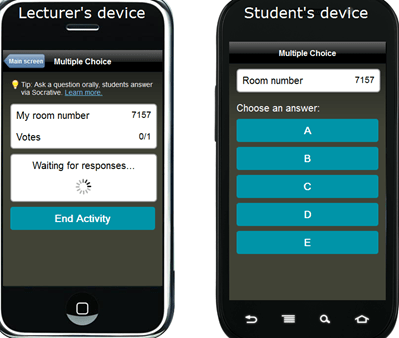
I have recently been trialling a brilliant smart student response system that empowers teachers to engage their classrooms through a series of educational exercises and games via smartphones, laptops, and tablets. This particular one is called Socrative. I have to admit it is a fantastic resource for all teachers of all subjects.

Socrative is very easy to use and takes only two minutes to set yourself up on it. You can import exercises and games or create your own. The only details they require are that you are a teacher, your school name and your email address.

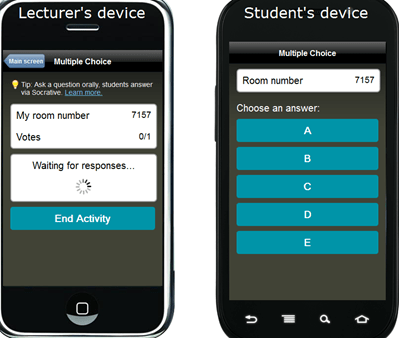
The apps are super simple and take seconds to login. Teachers login through their device and select an activity which controls the flow of questions and games. Students simply login with their device and interact real time with the content. The quizzes range from multiple choice questions, true or false responses or shoprt answers. The class gets instant answers and explanations on what they have inputed.

Student responses are visually represented for multiple choice, true/false and Short Answer questions. For pre-planned activities a teacher can view reports online as a google spreadsheet or as an emailed Excel file.

As they leave you could check on on your students’ understanding as they are able to leave a message on what they have learnt today and what they need to learn. Gather responses on their comfort with the material as well as answers to questions you create in real time or prepare before class.

The best thing about Socrative is that there is no exchange of personal information (such as mobile numbers) between the class or the teacher. When the class log in via the web address below, which is different to the teachers, the only thing they need is the room number, such as 12345, the quiz will start on their mobile phone. The results will appear on their mobile phone instantly, and the teacher can see the whole class response (not individuals).

To sign up http://m.socrative.com/lecturer/#register

For teacher login http://m.socrative.com/lecturer/#lecturerLogin

For student login http://m.socrative.com/student/#joinRoom

I would thoroughly recommend looking at Socrative, it would be a brilliant starter or plenary. Plus, you might want to check with your Headteacher and the whole school policy on mobile phones! Enjoy!

25 Simple Teaching Ideas

KS3 Geography Overhaul

Here are 25 simple ideas you might want to do in the classroom. If you have any questions or would like to add to my next 25 ideas (to be posted later in the year), please contact me via the blog or by twitter (@tiddtalk). Enjoy!

1. Post it notes

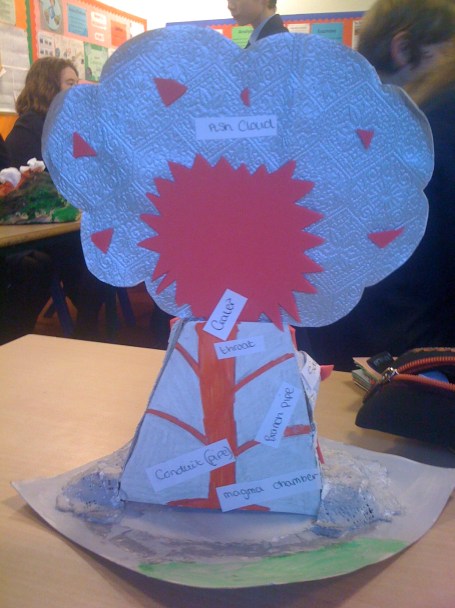
2. Make a volcano cake

3. Country of the week – Shower curtain map

4. Tweet it – Summarise what you have learnt in 140 words or less

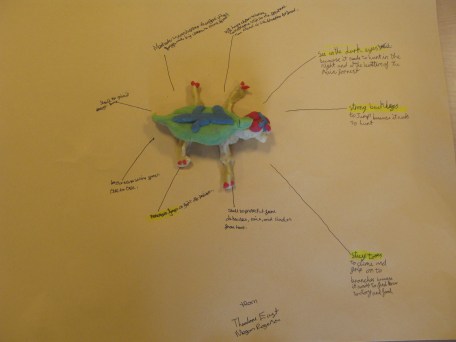
5. Model it with plastercine

6. Pop Up Models

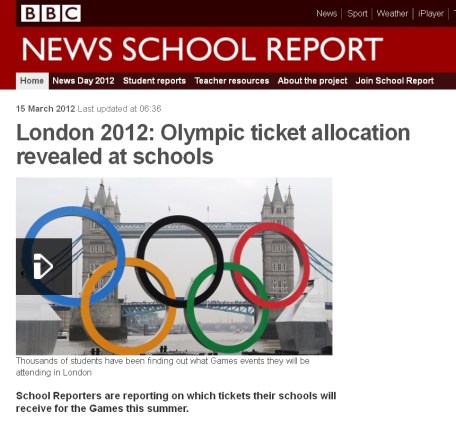
7. BBC news clips

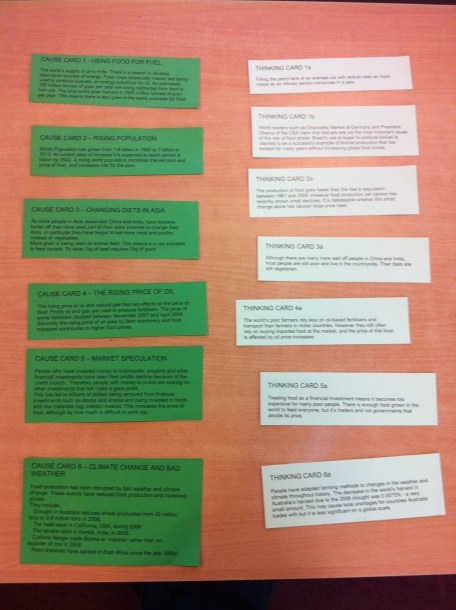
8. Thinking cards

9. Tidd News – create your own broadcast

10. Quizzes

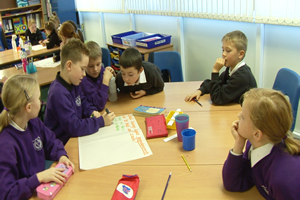
11. Collaborative learning – passing the paper around adding more ideas

12. Create mark scheme criteria

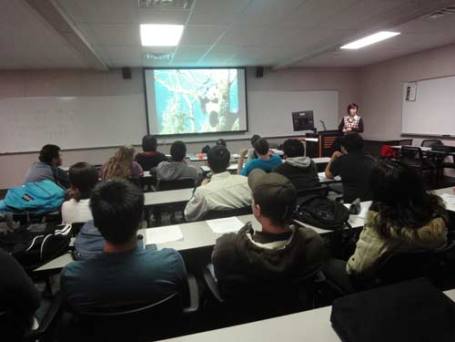
13. Presentations

14. Board games

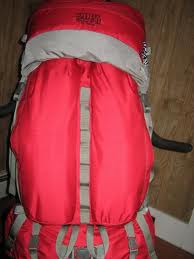
15. Mystery backpack – where in the world using the clues inside!

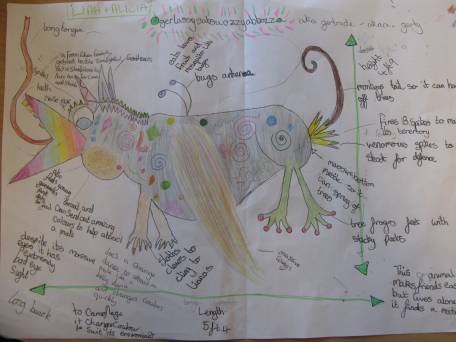
16. Draw it

17. Blog it

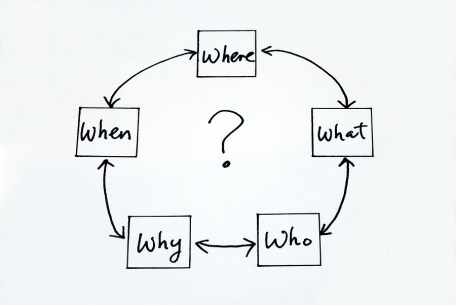
18. 5 W’s

19. Washing Line

20. Computer Game pitch – Dragons Den

21. Taboo

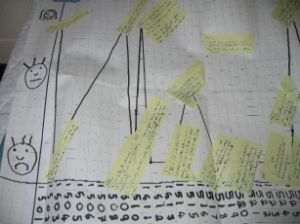
22. Living graph

23. Tidd Times

24. Emotive graph

25. Geography in the news

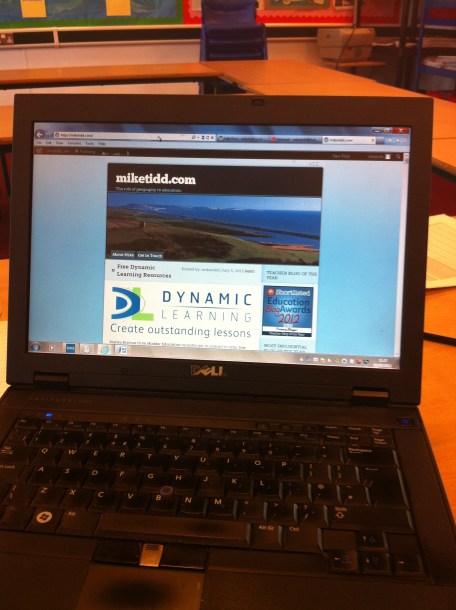
Free Dynamic Learning Resources

Blanka Biernat from Hodder Education recently got in contact to offer free Dynamic Learning resources that teachers can incorporate in their lessons. In my opinion anything free is a plus in education. I hope you will find these useful yourself. Below are the attached links to the activities. With our exam classes gone I am sure this will come in handy with the planning for September : )

Lesson: Exploring Geography in a Changing World 2 – ecosystem

Lesson: Exploring Geography In A Changing World 1 – Weather and Climate

Lesson: Exploring Geography in a Changing World 3 – Global Environmental

KS3 Geography Overhaul

1

For the last year our primary target for improvement has revolved around teaching & learning within Geography. We have spent the last year looking at our Key Stage 3 lessons seeing where we can make improvements and implement new teaching strategies. We have been trying to make the teaching experience more personal for the students and improve their independent study skills. This is being developed from KS3 onwards and carried on into KS4 and KS5.

The curriculum map we have designed  is set in a specific way. Most importantly it allows students to follow a natural progression building up skills and using them in a number of different ways. The progression also leads through to Key Stage 5. We are aiming to promote progression in a number of ways;

  • Depth of knowledge
  • Breadth of study
  • Complexity of concepts
  • Independent learning and research
  • An increase in spatial scale

Progression is mainly achieved through deeper understanding and increasing complexity of tasks.  There is also a broadening of the breadth of study.  More explicitly we are looking at increasing spatial scale, increasing awareness of society, economy and the environment. Work is currently being undertaken to ensure that there is smooth progression from KS2 to KS3 and also from KS4 to KS 5.

Year 7

Year 8

Year 9

  • Rainforest
  • Map work*
  • Tribes & Cultures
  • Crime
  • Hazards 1 – volcanoes & earthquakes*
  • Olympics
  • Population
  • Rivers*
  • Feeding the World
  • Ice Age
  • Energy
  • Antarctica research*
  • Hazards 2 – extreme weather
  • Deserts
  • Why is Africa disconnected?*
  • Coral Reefs
  • Sustainability
  • Hazards 3 – tsunami
  • Climate change*
  • Coasts
  • China
  • Stourhead
  • Buy a rainforest
  • Disaster Management Day
  • World Food Day
  • Fairtrade Fortnight
  • Brecon Beacons
  • Oxfam Unwrapped
  • World AIDS Day

*Levelled assessed piece of work

KS3 is the building blocks of a successful education. Key Stage 3 can be sometimes be forgotten about in this world of examinations at KS4 and 5. The young students at KS3 need the skills and knowledge to help them in their later geography education. We are currently devising eight topics containing eight lessons for each year group. This would enable free time for us to look at world events that take place i.e. Geography Awareness Week, Fairtrade Fortnight, Japanese earthquake etc. This new format and the topics decided upon can be seen in the table above.

We are entering a very exciting time at Gillingham School where we are creating an innovative and inspirational curriculum for our students. There have been some rollercoaster moments but none which were unexpected. My department has been working really hard on these lessons and I am 100% happy with what has been planned so far – well done team, you have been brilliant!

Education Blog Awards 2012

Yes, it is that time of year again for the Education Blog Awards! Last year I was extremely lucky and proud to have been of nominated and shortlisted for two blog awards; Best Teacher Blog and Most Influential Blog. This year I have been nominated for Best Teacher Blog and Most Influential Blog – thank you!

Every year the number of nominated blogs increases. For me though, it is reading about what is happening in schools and colleges across the world. There are so many amazing and innovative ideas that are taking place. There is plenty of food for thought out there by all the education bloggers! This year the awards are sponsored by Child Education, Primary Blogger and Just2Easy.

If you would like to vote for me or anyone else please click here.

Thank you and good luck to all my fellow bloggers!

Teaching Pin-Up

1

Well, it has been a very mixed term of many political upheavals in the world of education. From putting the blame on teachers for the riots, Rt. Hon. Michael Gove making more changes and promising more (!), to Sir Michael Wilshaw’s a of the Ofsted criteria, the pension issue and regional pay for teachers. Not all good news in the world of education and a feeling that we as teachers are not being treated as professionals by those at the top.

Now with the Easter holidays fast approaching I thought we have to be positive and be innovative in our approach to teaching and shake the Easter blues away. I thought it would be good timing to watch Sir Ken Robinson explain his future of education. This animate was adapted from a talk given at the RSA by Sir Ken Robinson, a world-renowned education and creativity expert. I fully appreciate that many of you will be watching this for the hundredth time but it is good…Have a great Easter!

http://www.youtube.com/watch?v=zDZFcDGpL4U

From Good to Great

‘I believe we need to radically improve our education system and that we need to work together to raise expectations, and close the gaps. The prize is worth having: a good or better education for all our young people, with no excuses accepted.’

Chief Inspector Sir Michael Wilshaw, Ofsted

This was a quote from Sir Michael Wilshaw’s first major speech as the new Chief Inspector of Ofsted. Speaking at the London Leadership Strategy ‘Good to great’ conference, he set out his ambition that all children will receive a good or better education and the steps Ofsted proposes to drive faster change. Like Marmite, educators are divided over Ofsted and its proposed changes again.

Sir Michael reiterated plans to replace the satisfactory judgement with ‘requires improvement’ and for all school inspections to be undertaken without notice.  He also announced a raising of expectations for outstanding schools and a tighter focus on the way in which headteachers are driving the quality of teaching in their schools.

These are very bold and decisive words from the new Chief Inspector of Ofsted. There is a sense of change and a throwing down of the gauntlet to many schools to improve. I was slightly disappointed that he didn’t fully recognise the good work that teachers do in their every day work. We are all trying to develop, improve and make our teaching the best we can. I do think the government, Ofsted and Sir Michael do need to acknowledge that not all teachers and schools are terrible. As teachers we do seem to get a bad press and not enough support from the people who make the decisions at the top. Like praising a student, praising a teacher can work wonders. Teaching is a great profession but we have to careful we do not put too many pressures on our teachers, as we might find people leaving and causing further issues further down the line. We do not want a situation where young graduates don’t choose teaching as a career or leave after two or three years.

However, Sir Michael is right – we do need to raise standards and continue to develop our education system. Changes do need to be made but the right ones. Change for the sake of change is never any good and I do worry that perhaps some institutions will put action plans in place without thinking through the consequences.

Firstly, Sir Michael stated the structure of the school inspection framework will not change. The focus will still be on the four key areas of achievement, teaching, behaviour and safety, and leadership. Ofsted will be doing away with the word ‘satisfactory’. If a school is not yet good, it ‘requires improvement’. So there will now be four judgements – outstanding, good, requires improvement and special measures. This re-grading will focus minds and send a clear and unequivocal message to schools that decisive action is necessary to bring about improvement. Sir Michael’s national ambition should be for all schools to be good or better.

Secondly, Sir Michael stated that a good school should have at least good teaching, and an outstanding school should have outstanding teaching. Good and outstanding leadership of teaching and learning drives improvement and knows that the culture of the school and the progress of pupils depend on it. To me this makes sense as I believe a school should be based on its teaching. According to Pasi Sahlberg, Director General of CIMO in Helsinki and author of Finnish Lessons: what can the world learn about educational change in Finland?, it takes 10 000 hours practice to become a great teacher. This is about 8 to 10 years active service. Consideration must be taking into account for new teachers when inspections are taking place.

Finally, it was mooted that with the National College that ‘outstanding’ headteachers would be part of a Ofsted national service inspecting other schools. Personally, I quite like this idea as I have sometimes felt inspectors can be slightly removed from the classroom if they have not taught for several years. Teaching is a very changeable profession and is very different now to when I started ten years ago for example.

Sir Michael has outlined a very clear plan for the future in teaching. As long as we are all working together and working towards a common goal it could be a success. ‘Radical changes’ and for all schools to be good or better are Sir Michael’s plans – a no excuses culture. Lets hope Sir Michael, Ofsted and the government have thought them all through with teacher input.

Teaching & Twitter

1

For the past six months I have become a fan of Twitter (@tiddtalk). It has enabled me to network very freely with other like minded teachers and educators around the world. This can enable you to spread information very quickly on what is happening now or a particular moment. It is an excellent resource to spread information especially if you have updated your blog and are looking for instant readership. It is a great use of technology and is something I have found to be a great source of learning and enjoyment.

Two weeks ago the BBC reported that Scottish teachers are being warned that their use of social networking sites could put their careers at risk. The Scottish Secondary Teachers Association believes teachers can reveal too much personal information on sites such as Facebook and Twitter. The full article can be found here.

The General Teaching Council of Scotland is preparing new guidelines on social networking sites. This follows a number of recent cases brought before the GTC’s regulatory body.

Jim Docherty, assistant secretary of the SSTA, told BBC Scotland that teachers should follow his advice: “First thing is don’t bother telling anybody else about your social life. Secondly, never make any comment about your work, about your employer, about teaching issues in general. There is always a possibility it will be misinterpreted.”

I totally agree with these sentiments. We have to be very careful with what we write and who we share this information with. As long as we are professional and think before we tweet we should not fear this medium of sharing information and knowledge. Twitter is here to stay and is the future of learning. Using technology in the right way can only improve our lessons and sharing of ideas.

The Courier Mail of Australia have written a very interesting article today on Twitter being used in the classroom. Research from Southern Cross University has found strong benefits for the use of Twitter by students too embarrassed or uncomfortable to ask teachers questions in the time-honoured raised-hand method.

Southern Cross business lecturer Jeremy Novak, along with Central Queensland University’s Dr Michael Cowling, studied the use of Twitter among university students as a method for asking questions and gaining feedback without having to stand the stares and scrutiny of fellow students.

The positive feedback from students, particularly international students, has convinced the research team the use of Twitter technology could also be embraced by classrooms at high school and even primary school level.

“Twitter is another exciting teaching aide that is highly under-utilised by lecturers and teachers in the education sector,” Mr Novak said. The full article can be found here.

I would really like to hear from other educators who are using twitter in their classrooms. I do think social networking sites can be used correctly in schools and can enhance the students learning and interaction. School portals and virtual learning zones are the just the beginining and we need to embrace the technology that is out there in our schools.

Schools could have their own Twitter accounts, for example, where parents and students could follow what upcoming events the school would be holding i.e. parents evenings, fetes, school productions etc.  Please follow me via twitter @tiddtalk.

Please complete the poll below – I would really like to read/hear your comments and experiences of Twitter.

Winter Review: Busy term…again!

The past term has flown at such an accelerated rate .– I have found that every year seems to go faster and faster – no slowing down in the world of geography! At Gillingham School we always endeavor to do the best for our students and are always willing to try out new ideas to improve their knowledge and independent learning.

  • Key Stage 3

We have looked at all our Key Stage 3 lessons seeing where we can make improvements and implementing new teaching strategies. We have been trying to make the teaching experience more personal for the students and improve their independent study skills. This is being developed from KS3 onwards and carried on into KS4 and KS5.

The curriculum map we have designed, seen below, is set in a specific way. Most importantly it allows students to follow a natural progression building up skills and using them in a number of different ways. The progression also leads through to Key Stage 5. We are aiming to promote progression in a number of ways;

  • Depth of knowledge
  • Breadth of study
  • Complexity of concepts
  • Independent learning and research
  • An increase in spatial scale

Year
7

Year
8

Year
9

  • Rainforest
  • Mapwork
  • Hazards 1 – volcanoes & earthquakes
  • Crime
  • Olympics
  • Tribes & Cultures
  • Population
  • Geographical research
  • Deserts
  • Shanty towns
  • Rivers
  • Feeding the world
  • Hazards 2 – extreme weather
  • Energy
  • Ice Age
  • Geographical research
  • Hazards        3 – tsunami
  • Why is Africa disconnected?
  • Climate change
  • Chindia
  • Coral reefs
  • Waste
  • Coasts
  • Geographical research
  • Stourhead
  • School based fieldwork
  • Disaster Management Day
  • School based fieldwork
  •  Brecon Beacons
  •  School based fieldwork

We must not forget that KS3 is the building blocks of a successful education. Key Stage 3 can be sometimes be forgotten about in this world of examinations at KS4 and 5. The young students at KS3 need the skills and knowledge to help them in their later geography education.

  • Barcelona Fieldtrip

The Barcelona AS Geography Fieldtrip took place between Monday 28th November – Friday 2nd December. The students gained a great deal from this fieldwork and the experiences and lessons learned from it are now examined in a unit worth 40% of their final AS grade. In total we took 57 Year 12 students who worked brilliantly throughout the five days out there – well done to all of you!

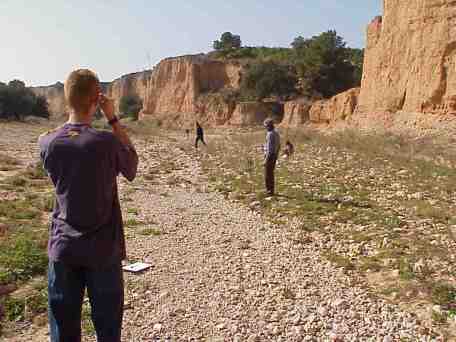
The trip focused on two topics – Extreme Weather and Rebranding. For extreme weather we looked at a dry river valley that experiences flash flooding in the Riera de Ribes region outside Sitges, thirty minutes south of Barcelona. For the past three years I have never seen any rain in this region but three weeks before we left they did have an extreme flash flood go through the area.

For rebranding we looked at two locations; El Ravel in Barcelona and the Priorat region. El Ravel is an area that is being rebranded with some flagship projects; the Rambla del El Ravel, the Barcelo 4* hotel, the Museum of Contemporary Arts and the university. Our student were investigating whether or not these flagship development projects had been a success of not.

The Priorat region is 120km south of Barcelona, a place depopulation due to tourism and an economic downturn in agriculture has afflicted the area. In recent years the region has been a world known wine growing part of Spain where many international wine awards have been won. Once again our students where looking at the success of this project on a poor area of Spain.

One again I would like to congratulate the students for their hard work and dedication this term – and especially to Andy, Lizzy, Mike, Adam and Emma who helped run the trip.

  • A’ Level Geography Blog

In the past week my fellow geographer, Adam Bettiss, has developed and put together two blogs for our A’Level classes; one focusing on the Year 13 unit of Life on the Margins and a case study blog for our Year 12 students. The great thing with both is that the students have control of what goes on the blog from their findings. This has been a great success and introduced students and staff (!) to the world of blogging – great stuff!

There has of course been the general day-to-day teaching which is where the real learning takes place – I have thoroughly enjoyed this term and the great work that the Geography Department have produced, well done to you all and have a fantastic Christmas.