
The Importance of Teaching

The Importance of Teaching – this is the name the Government chose for the White Paper underpinning the Education Bill.

Teaching is a popular profession for many graduates. The number of graduates completing PGCE’s has steadily risen over the last few years. It is a role that people find exciting, challenging and extremely stimulating. It is a profession where we are able to move people forward in their aspirations and assist their learning. Education does sometimes get too much bad press and the papers gloss over the successes and achievements that teaching has bought to so many thousands of pupils and students.

Unfortunately, I was sad to read that the number of teacher training places at universities and colleges is to be cut by one fifth. The Coalition wants more teachers to learn their skills on the job in schools rather than in training colleges. Now I agree that we should have more on the job training – it’s where I learnt my skills and it was where I did most of my learning– but fewer teachers and training opportunities? Universities and teaching colleges offer fantastic teaching expertise and facilities that should be further funded. 
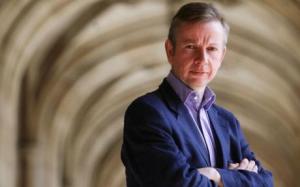
Michael Gove, the Education Secretary, is also taking an axe to the bursary packages currently enjoyed by trainees. I received £6,000 for a year of training for my PGCE. Without this funding I would have been unable to have trained as a teacher. Being a student is expensive and even more so today. Travel, accommodation and food is not cheap. Funding has gone for subjects such as English, history, geography and art.

Instead, those who want to train as physics, chemistry, engineering and maths teachers will receive bursaries of £9,000 a year. Trainees who want to be biology, general science or foreign language teachers will receive £6,000 a year. This maybe in response to subject demand but I am sure we will need teachers in english, history, geography and art in the future and these cuts maybe putting off hundreds of potential brilliant teachers.
Michael Gove has also outlined plans to only accept trainee teachers with 2.2 degree or above. Yes, we do need qualified teachers with good knowledge but isn’t the ability to teach and inspire important too? There are thousands of teachers who are fantastic at their job, inspiring and motivating everyday but may not necessary have a 2.2 or above. I think Michael Gove has got his agenda wrong on this point. What degree you hold should not define or hold you back from teaching.

I do agree that we need competent, dedicated and enthusiastic teachers in our schools. But, we must work together and I just wished the Government had involved more teachers in their decisions.

As Batman once said, ‘it isn’t what you say that defines you but what you do’ (Batman Begins, 2005).


Global Giants

I had a lovely email from Steve Brace, Head of Education at the Royal Geographical Society, last week. He had found my blog and wrote a lovely email to me. I did very much his comment about geography at my school; ‘how heartening it is to see how well geography is doing at Gillingham School.’

Steve wrote about the Chartered Geographer (CGeog) accreditation offered by the RGS. I have read bits and pieces of this accreditation in the past, but it wasn’t till Steve got in contact that I did further reading about it.

The RGS website states the  ‘Chartered Geographer (CGeog) is the only internationally recognised professional accreditation for those with competence, experience and professionalism in the use of geographical knowledge, understanding and skills in the workplace.’What are the benefits of being a Chartered Geographer?

  • Recognition
  • Personal Development
  • Chartered Geographer
  • Benefits to Employers and
  • Fellowship (FRGS) of a Prestigious Learned Society

As Alan Parkinson says, ‘the CGeog is a qualification which spurs you on to improve your own professional development, and maintain the curiosity about the subject. Teachers should also be learners, and the CGeog provides a framework for that process, as well as recognition when it is achieved.’

With this in mind, I have decided that I will apply for the accreditation this year. It sounds a worthwhile professional accreditation that recognises our hard work as teachers fits perfectly with my CPD. Thanks Steve, my application is coming your way. Fingers cross I get it!

Genius Unleashing

Is there a genius in all of us? This was a question posed by David Shenk, author of The Genius In All of Us. It was generally believed in science that people’s talent was genetic, but new science suggests the source of abilities is more a developmental process and this includes what we get from our genes.

David Shenk says, ‘Our abilities are not set in genetic stone. They are soft and sculptable, far into adulthood. With humility, with hope, and with extraordinary determination, greatness is something to which any kid – of any age – can aspire.’

This is an interesting thought for which many teachers. A persons genius could be drawn out by inspiration and motivation, and who knows who will be a genius? We have classes of young people on a daily basis who are the future – don’t forget to inspire!

Tricks of the trade

Today I have an article printed in Sec-Ed. Sec-Ed is the UK’s only free national education paper that is sent to every school every week. I am a massive fan of this paper and love to read the stories and articles that appear every week. I have been lucky to have had some articles printed by Sec-Ed over the last two years. The article was based on the idea of ‘what tools does a teacher need?’ This was quite tricky as we all have different ideas but I hope you get the idea!

I really enjoy sharing ideas with other practitioners and learning a new technique or way of doing something. Sometimes we are left to our own devices and perhaps we should be talking and sharing resources more often.

The main tools I focused on were;

  • Blogs
  • Working as a team
  • Thinking outside the box
  • Enjoy your lessons
  • Assessment for Learning (Afl)
  • Reflective teaching

The full article can be accessed here. I hope you enjoy the read! Many thanks to Pete Henshaw, Editor of Sec-Ed, once again for printing my article – cheers!

Goodbye 2010, and hello 2011

Wow! A new term and a new year, 2011, bring it on! 

For those of you who have not read my blog, my name is Mike Tidd. I am the Head of Geography at Gillingham School in Dorset. I have been a teacher for most of my working life and I immensely enjoy my role as a teacher. I have a deep interest in education developments and I am motivated to help my fellow practitioners and students to achieve their potential.

Over the past two weeks I have had a chance to reflect back on a very eventful year. As I get older I seem to find the years do get faster and I sometimes find it hard to pack everything in I would like to. 2010 was my first year as a blogger on the blogosphere. I started one year ago as a new writer in a cyber world I was not always sure about. Creating my own web site has given me the chance to improve my IT skills and look at the wealth of knowledge out there. This has helped improve my knowledge, understanding and my teaching.

I started my second year at Gillingham School in Dorset in September as Head of Geography. I have been lucky enough to work with a very dedicated department whose enthusiasm remains high. They have been a great bunch of geographers to work with (yes, all seven of you!). Our results last summer were exceptional and is a reflection of the hard work of the geography teachers and the students efforts – well done to everyone!

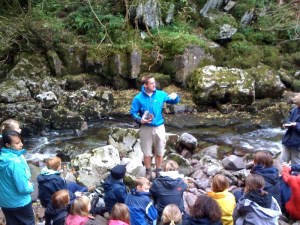
2010 was also a year of field trips. Fieldtrips, in my opinion, are an integral part of geography. We are very lucky at Gillingham School that we have a Senior Management Team that also see the benefits of field trips. The year 7’s went to Stourhead as part of the Lavlantic Cup Challenge developing their map skills through orienteering. The Year 8’s had the opportunity to go the Brecon Beacons for some glacial geography and GIS fieldwork techniques. The year 9’s went to Marwell Zoo for sustainable and ecological learning. The year 11’s went to Lyme Regis for coastal erosion, deposition and management as part of their controlled assessment. And finally, year 12 went to Barcelona looking at urban and rural rebranding and extreme weather. Lots of planning but it’s what makes geography so special!

Now that 2010 is gone, what will 2011 bring Mike Tidd?

Controlled Assessments


With a new curriculum and syllabus I will be taking much interest in the results of our controlled assessments. I have written previously about my thoughts and feelings towards this type of assessment. From doing our first controlled assessment last term we have learnt many things we would better next time to improve the student’s experience. With other subject areas doing controlled assessments there has been a huge pressure on the students. They do seem to be on an endless cycle of exams over four years if they continue into A’Level. The jury, in my opinion, is still out on the changes that have been made with the syllabus changes. 

Fieldtrips

This year my Department will be creating and developing a trial controlled assessment for Year 9. We feel the students need to develop the skills we require at KS4 and beyond. A GCSE style field trip would offer the students the skills needed and the experience of completing a GCSE piece of work.  As a geography teacher I am very much in favor of field trips. Firstly, they enhance the student’s experience fo the subject by reinforcing their learning and understanding within the classroom. Secondly, it further develops the students as young adults. Fieldtrips do offer students an experience where they can develop their individual and team work skills. 

Key Stage 4 Changes 

Now that we are going into the second year of the new GCSE, we shall continue to tweak and make changes to our curriculum. Now that we are completing our second year of the GCSE curriculum we have a much better understanding the requirements of the exam and what our students need to achieve to gain their grades.

Development and whole scale overhaul of KS3

With the new curriculum at Key Stage 4 and 5, Key Stage 3 must be a priority in the up coming year. We do seem to be on a continuous cycle of rewriting, but we must not forget the building blocks of a successful education. Key Stage 3 can be sometimes be forgotten about in this world of examinations at KS4 and 5. The young students at KS3 need the skills and knowledge to help them in their later geography education. 

Mentoring New Teachers


I would like to see the department become a centre for new geography teachers to learn their craft. I feel we have a wide variety of teachers and expertise that would help any new teacher. This is an area I would really like to start occurring this year at some point.

Personally, I would like to continue to develop as a geography teacher. I know my strengths and weaknesses and appreciate I am far from the finished article. Teaching is a career where you can always continue to develop as a practitioner. I will continue to write about my experiences along with my thoughts and feelings on the education developments that occur as the year goes on.

Geography is the subject of the 21st century and I hope to hear from you all at some point during the year.

‘Geography Teachers Are World’s Best’

Having just returned from Barcelona I am catching up on the news and I was delighted to see Geography Teachers gaining praise by Prince Andrew. This has come out due to the recent WikiLeaks. Geography has been always been something of a Royal subject with Prince William having recently studying the subject at St. Andrew’s University. For the full report please follow the link here. Just out of interest, does that mean I have a chance of being Knighted?

Barcelona 2010

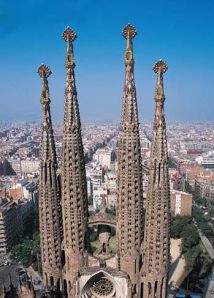
This year I have had the chance to organise the A’Level field trip to Barcelona. I have organised many field trips over the years but this was my first overseas trip. At Gillingham School the Geography Department have been going to Barcelona for the last twelve years with much success. Initially it was quite daunting planning a trip overseas but I have had much help and guidance for which I am especially grateful for – thank you team!

For our A’Level the students are requested to undertake several days fieldwork which they are assessed for in January as part of an examination. Our focus for the trip was rebranding and extreme weather. Going to Barcelona lets us complete all these topics and at a much cheaper cost compared to the UK. We also complete our fieldwork with the Barcelona Field Studies Centre who are very experienced team of geographers run by Derek Geary.

Day one consists of an orientation tour of Barcelona city and a pre-fieldwork session outling the field trip.

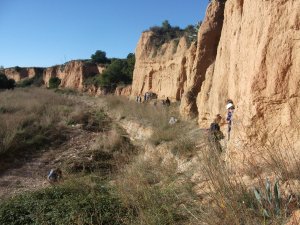
Day two is primarily the extreme weather day focusing on flash flooding at the River Ribes.

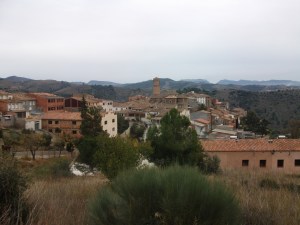
Day three is the rural rebranding day in the Priorat region of Spain looking at the success of the wine industry.

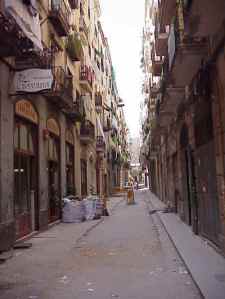
Day Four is the urban rebranding day in El Raval looking at the success of the flagship development projects.  

After each day the students work extremely hard on looking at and evaluating their methods, results and conclusions. Well done and thank you to everyone involved – you were all brilliant!

Controlled Assessments

We have just finished completing our controlled assessment in geography to mixed reviews. Have other schools felt the same?

As a department we have a very successful record of doing well across all types of learners and is something as teachers we are proud of. Like any job/role this has taking a lot of time and effort to put in place. But I recently felt from completing the controlled assessment that it is stretching the higher ability students and maybe not so helpful or beneficial for the less able students. Whereas before you could push and motivate a C/D student to gain a C, now with the examination high level control they get a D. The higher ability students though have really enjoyed the expereince. With a busy stressful year, many of our Year 11 students have not enjoyed their experience due to the following factors:

  • Students are less than enthused with more exams
  • Increase in pressure/stress on Year 11
  • Teacher/Student free time is lost when time is lost due to trips/absences
  • They have to complete certain sections in exam conditions
  • Completion of the CAT is across several weeks when other committments happen
  • They can’t complete the work in the time periods set

I would like to hear other schools’ experiences of the controlled assessment. Is it working in your centre? I am sure with time the experience will be more positive, but it does not feel like the experience we were first told about.

London Futures

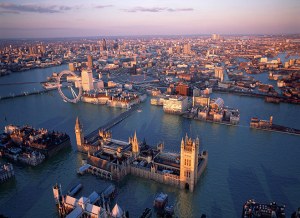
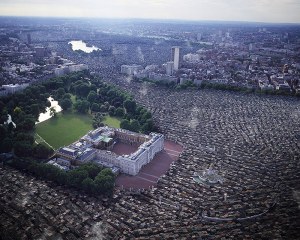
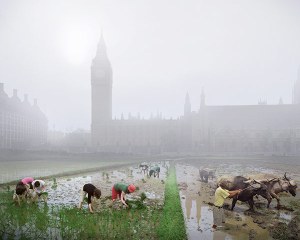
A new exhibition to illustrate London’s  landmarks in an environment transformed by climate change, is being held at the Museum of London. The photographs have been digitally changed by illustrators Robert Graves and Didier Madoc-Jones. The display shows the full impact of global warning, food scarcity, rising sea levels and how people will need to survive and adapt for the future. The exhibition is running from now till March 2011.