
GIS for Beginners

With the new Controlled Assessments for GCSE it has highlighted that Geographic Information Systems (GIS) must be used in the students work. This has made it necessary that every member of a Geography Department has an awareness of GIS and that students need to develop their skills from an early age. With this in mind the Geographical Association has put together a series of two-day training courses aimed at geography teachers who are new to GIS. 

A geographic information system (GIS) integrates hardware, software, and data for capturing, managing, analysing, and displaying all forms of geographically referenced information. GIS allows us to view, understand, question, interpret, and visualize data in many ways that reveal relationships, patterns, and trends in the form of maps, globes, reports, and charts. A GIS helps you answer questions and solve problems by looking at your data in a way that is quickly understood and easily shared.
The following information is from the Geographical Association website which outlines The GIS for Beginners course;

  • Day one: After a brief overview of GIS, you will develop basic GIS skills through hands-on practical exercises and case studies. This will help you to create a GIS resource for your school. Through a myGIS practical activity you will be introduced to the main functions of DigitalWorlds. You will also look at GIS in the curriculum/exam specifications.
  • Back in the classroom: Over the next few weeks you will put your GIS skills into practice using your ESRI(UK) software.
  • Day two: An opportunity for feedback and reflection before progressing on to more advanced GIS skills.

Course aims and outcomes

  • To outline the difference between visualisation and GIS and develop both basic and more advanced skills using DigitalWorlds software
  • To increase familiarity with DigitalWorlds software, and the way that it can be used in geographical enquiries and Controlled Assessment tasks
  • To allow time for school-based reflection and development of GIS in the curriculum
  • To introduce delegates to the online community of GIS users and additional sources of ongoing support
  • To provide ideas for using GIS at KS3, and to supplement Controlled Assessment tasks at GCSE
  • To provide examples of places to find further data and mapping, and ongoing support for your professional development
  • To gain confidence with DigitalWorlds software, to be able to use it with students, and develop enquiry sequences which are engaging and relevant to individual school contexts
  • To become familiar with some more advanced GIS skills

This sounds a great opportunity for Geography Departments across the country to develop and improve the GIS that is currently being taught giving the students the best opportunities on developing the necessary skills to gain their top grades. The Geographical Association are brilliant at delivering these course. If you are interested or want to know more please follow the link here. I know we will be booking one of these courses at Gillingham!

Where is your homework?

One of my favourite education papers is Sec-Ed. Sec-Ed is the UK’s leading free education paper that is sent to every school across the country. I have been very lucky in the past to have had some articles printed by themselves, of which can be found on the Sec-Ed Articles tab on the right hand side. Pete Henshaw, editor and Chris Parr are great writers who are always on the look out for new writers and education issues to print.

Last weeks Sec-Ed edition was another classic with an article on the back pages that gripped my attention…‘My Goldfish ate my homework’ by Emma-Lee Potter. It was very amusingly written looking at the different excuses that we as teachers have heard regarding homework either being late in or not being handed in at all. It was interesting to read that up to twenty different excuses have been heard by some teachers over a given week, my favourite being ‘a lion took it’. Well done Emma-Lee, Pete and Chris! The article can be accessed here.

It does ask the question though, is the right homework being set, too much/too little or not pitched at the correct level? Any comments are greatly received.

Classroom Antics

What are the tools and key things a teacher needs?

This was a question I posed last week on my blog. It is quite tricky as every teacher has different views on what they need to be successful and to help their everyday lives. So I have come up with my own list. Enjoy!

  • Blogs

For the last few years I have found blogs a great source to further my understanding and learn new skills as a teacher. I have always said that a teacher never stops learning. Just like our students we as teaching practitioners are constantly learning new techniques on improving our methods we use in the classroom. This is part of the reason why I love teaching, it is never dull and is a challenge I relish on a daily basis. Out on the ‘Blogosphere’ are some brilliant writers who share their teaching experiences, daily routines, ideas, schemes of work, lessons…you name it and teachers are writing about it! Reading about someone elses experience can create and add to your armoury of activities. Some of the best writers out there are Ollie Bray, Dave Rogers and Alan Parkinson who I wholly recommend on reading.

  •  Google Earth/Google Maps

As a geographer Google Earth and Google Maps have the best free Geographical Information Systems (GIS) software available. For students who need to include GIS in their coursework at Key Stage 4 and 5, this is the best start and easiest solution. Most students have access in some format to a computer and Google Earth/Google Maps can be used from a very early age giving them the skills and presentation techniques they need later on in their school career. Simple activities like spinning the globe round or locating places in the world from your location can make a young person make a sense of their place in the world.

  • Working as a Team

Teaching can sometimes be a lonely job, with yourself up against thirty students challenging you. It can sometimes feel you are the Lone Ranger but that is not so. Using people around you can make your life much easier especially when you need help or guidance. For a young teacher this is possibly the best tip I can pass on…talk to those around you. I have worked in some great Departments where working together and sharing ideas/work loads makes everybody feel important and better about themselves. The success of a Department should improve too with more minds working together then one. The work – life balance is very important and should never be forgotten! 

  • Thinking Outside the Box

Being innovative and brave within a classroom can bring enjoyment, success and respect. I admit not every idea I have tried has worked but those that do can enhance the student’s experience of your subject. Trialling new ideas improve your lessons and enjoyment as a teacher. It is not always easy trying out new ideas. It is very easy to stay in the comfort zone but without trying out new ideas we do not develop ourselves as teachers and will not improve.

  • Enjoy your lessons

As teachers we work long hours and spend many lessons preparing and planning work. We have the aim of teaching the National Curriculum and working with our students on achieving their personal best and gaining the grades they deserve. But…we must enjoy our working life. There are many pressures in the education industry and targets to achieve. Teaching in my opinion is the greatest role in life that someone can do. To actually see the look of wonder and understanding on someone’s face is something that cannot be bought. To pass on knowledge and see where it takes a young person in life is amazing. To actually help young people in life choose a path in the life with your encouragement and guidance is breathtaking. There is much to enjoy from teaching, just don’t forget the positives!

Teacher Tools

With the new term fast approaching, I have started preparing for my new classes and aims for the year. Before the summer break I outlined my five objectives for the year ahead and wrote about them on my blog back in May. These were:

  • Teaching & Learning
  • Assessment for Learning
  • Reflective Teaching (including observations)
  • Technology
  • International link with a school abroad and feeder schools

With these five objectives in mind it has got me thinking what are the most important tools to achieve this? What do we need as teachers on a day-to-day basis? What are the best web pages/blogs for guidance? What tools can we do without to teach? I will be putting my list together on the next few days, but I would like to hear your views and share them.

5 Mountains and a Wedding

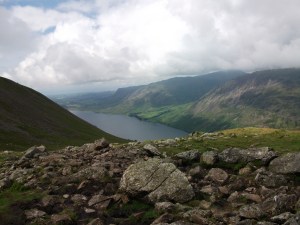
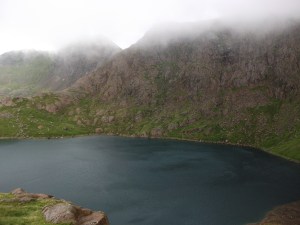
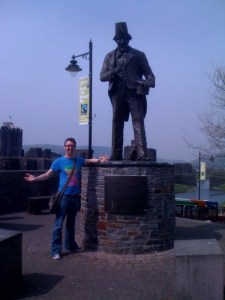
The summer has been a well needed break to rejuvenate the batteries for September. My summer has mainly consisted of climbing mountains. The objective was to climb the three highest peaks in Britain; Ben Nevis (1,344 metres above sea level) in Scotland, Scafell Pike (978 metres)  in England and Snowdon (1,085 metres) in Wales. Everything went to plan and the mountain climbs were an unbelievable experience even with the added rain! After climbing all three peaks two more mountains were added down in South Wales, Pen y Fan (the highest mountain in Southern Britain at 886 metres) and Cribyn (795 metres). From all five peaks I have witnessed some brilliant views and some amazing landscapes as you can see from the photographs. Maybe next time I shall attempt the Three Peaks Challenge in 24 hours! Anyone else up for it?

During all of this I also attended a very good friends wedding day in Glasgow. It was a very traditional Scottish ceremony and it was great to catch up with so many friends from my days at Plymouth University. Congratulations to the new Mr and Mrs Simpson!

Celebrating Success

For all of us I am sure it has been a very long and productive year. Today, we get a chance to celebrate and congratulate our AS and A2 students. Personally, it is the end of my first year of teaching at Gillingham School in Dorset as Head of Geography. It has been a thought-provoking, productive and exciting year for myself, one I have very much enjoyed. I have been extremely lucky to work with an outstanding department who all bring their own individual strengths to make Geography a fantastic experience for all our students. With the GCSE and A’Level changes there has been much to think about and contend with along with teaching every day. As my fellow geography teacher Andy Jenkins said, ‘great things are not built-in one day or even one year, enjoy the summer and bring on September.’

Good luck with the results today, I would love to hear how everyone gets on. Over the coming weeks I shall be writing about what I have been up to over the past few months and what lies ahead for the world of Geography in education. If anyone would like to share or add their views with myself or get in contact please feel free to make a comment by clicking below or via the ‘get in touch’ tab at the top of the web page.

Reflective Teaching

This year in education has been one of change and planning for the future. With the new GCSEs, AS/A2 curriculum changes it has given me much to think about since I joined Gillingham School in September 2009. Joining a very successful school and department I have had big shoes to fill, a challenge I have relished. I believe I have put in place the correct building blocks for the future. This month I have had a chance to look back and reflect upon our successes and future developments. For a successful department I believe you must not look at too many areas to change, focus, innovate or tweak. Geoff Barton, Headteacher of the King Edward XI School likened managing a large department to plate spinning, you have to be able to manage each of the areas you start to change – too many and the plates start crashing around you. Personally, a maximum of five strategies/innovations is perfect. Making sure your strategies are manageable and flexible you are able to keep a good grasp and move the strategies forward.

Idris Mootee, of  the innovation playground blog,  has said, ‘innovation is hard, it is not about getting the ideas at all, it is about managing ideas. So you have a few great ideas, so what? The future is never about the future but now.’

The five strategies we will be focusing on are outlined below:

  • Teaching & learning

The primary target for improvement this year revolves around teaching & learning within Geography. As a Department we want to teach the best we can and we are looking at our lessons and seeing where we can make improvements and implementing new teaching strategies. We must make our teaching experience more personal for the students and improve their independent study skills. This must be developed from KS3 onwards and carried on within the school.

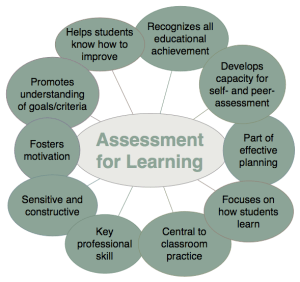
  • Assessment for Learning

AFL is a very important skill and is an area where we could develop within Geography. As teachers we are sometimes too controlling and we must put the onus back on the students for them to achieve. Investigating methods and ways of implementing this into our schemes of work must be one of our priorities. This will encourage student learning and raise achievement across all year groups. AFL will also help improve the student’s knowledge of using a mark scheme and what to include in a good answer. This will reduce our marking and in the long-term our workload.

  • Reflective Teaching (including observations)

As teachers we must be more reflective of our own practice and make amendments where we need to. We must utilise our strengths and work on our areas of development. Observations are vitally important to watch other teachers and how students learn. This would be ideally done within the Department and with other Departments once a term where possible. This should therefore improve our own teaching and benefit the students .Working with other colleagues will help develop cross curricular opportunities to raise achievement throughout the school.

  • Technology

Geography has prided itself on using technology where possible to improve our lessons and the student experience. This needs to be further developed to further enhance our learning and the students. GIS must be developed within the Department across all year groups.

  • International link with a school abroad and feeder schools

As part of our role in the local and global community we would be looking to develop a link with a school abroad. This would develop our student’s knowledge of their role within a global community and understanding of issues that occur worldwide.

Locally we would like to work with the feeder schools on developing our link and improving geography. This would enhance geography’s status and develop their geographical knowledge. Geography is sometimes not always taught in primary schools to a high level and we would like to develop this to help their progression and achievement later on.

Please get in contact regarding what your departments/schools are planning/changing for the future…I would love to hear them especially in these uncertain times with possible budget/curriculum changes.

innovation playground

A blog I have been recently reading courtesy of my brothers’ insistence is Idris Mootee’s innovation playground. Idris is a business strategist and business specialist who blogs about his thoughts and feelings regarding business, innovation and emerging technologies. He is the founder of Idea Couture, winner of the innovative company of the year award. 

Idris Mootee is an authority in strategic innovation, a system and design thinker, Idris partners with clients in all sectors globally to identify their highest-value innovation opportunities, address their most critical challenges, explore strategic options and develop breakthrough ideas.

Idris is a huge fan of thinking outside of the box and using your imagination to move forward or solve problems. It is a very thought-provoking, interesting and humorous read regardless of your education/business background. Idris has several ideas that can be transferable to a school or department. I particular love his use of quotes in his blogs (how does he know so many?!?).  He is very forward thinking who is always trying to stay one step ahead of the crowd…which perhaps is why he is very successful at what he does. I recommend reading innovation playground…it’s the future. It has many links to education and how we teach young people using his ideas from the world of business, a major part is enjoying yourself and having fun. If we gave a five-year old a cardboard box, a pen and a ruler and told them to design a hotel, they would. But if we gave the same scenario to an adult, they would come up with problems. This is a process that happens as a person gets older and we seem to put up barriers. We must become more innovative in education and look outside the box occasionally.

If Idris would ever like to catch up for a coffee to discuss the future of schools and education I would be more than happy!

Where now for geography?


After a very long and stressful journey to work today I was pleased to see one of my articles printed in Sec-Ed. Sec-Ed is the UK’s only free national teaching paper that is sent to every UK Headteacher and staffroom. I am a huge fan of the paper with its well written articles and comments on education and teaching in the UK. I have been very lucky in the past to have had several articles printed by them and I hope this continues for the future. Thank you to Pete Henshaw (Editor)  and Chris Parr (Chief Reporter) for all your help.

The article is titled  ‘Where now for geography?’ and focuses on geography’s fight for survival as a curriculum taught subject. This is quite a personal article being a geographer and I am very passionate about geography’s role within a schools curriculum. The article can be accessed here for your perusal. Enjoy!