5 Mountains and a Wedding

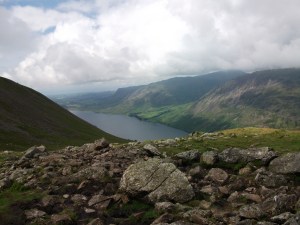
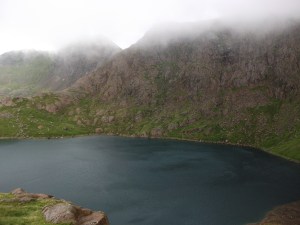
The summer has been a well needed break to rejuvenate the batteries for September. My summer has mainly consisted of climbing mountains. The objective was to climb the three highest peaks in Britain; Ben Nevis (1,344 metres above sea level) in Scotland, Scafell Pike (978 metres)  in England and Snowdon (1,085 metres) in Wales. Everything went to plan and the mountain climbs were an unbelievable experience even with the added rain! After climbing all three peaks two more mountains were added down in South Wales, Pen y Fan (the highest mountain in Southern Britain at 886 metres) and Cribyn (795 metres). From all five peaks I have witnessed some brilliant views and some amazing landscapes as you can see from the photographs. Maybe next time I shall attempt the Three Peaks Challenge in 24 hours! Anyone else up for it?

During all of this I also attended a very good friends wedding day in Glasgow. It was a very traditional Scottish ceremony and it was great to catch up with so many friends from my days at Plymouth University. Congratulations to the new Mr and Mrs Simpson!

Celebrating Success

For all of us I am sure it has been a very long and productive year. Today, we get a chance to celebrate and congratulate our AS and A2 students. Personally, it is the end of my first year of teaching at Gillingham School in Dorset as Head of Geography. It has been a thought-provoking, productive and exciting year for myself, one I have very much enjoyed. I have been extremely lucky to work with an outstanding department who all bring their own individual strengths to make Geography a fantastic experience for all our students. With the GCSE and A’Level changes there has been much to think about and contend with along with teaching every day. As my fellow geography teacher Andy Jenkins said, ‘great things are not built-in one day or even one year, enjoy the summer and bring on September.’

Good luck with the results today, I would love to hear how everyone gets on. Over the coming weeks I shall be writing about what I have been up to over the past few months and what lies ahead for the world of Geography in education. If anyone would like to share or add their views with myself or get in contact please feel free to make a comment by clicking below or via the ‘get in touch’ tab at the top of the web page.

Reflective Teaching

This year in education has been one of change and planning for the future. With the new GCSEs, AS/A2 curriculum changes it has given me much to think about since I joined Gillingham School in September 2009. Joining a very successful school and department I have had big shoes to fill, a challenge I have relished. I believe I have put in place the correct building blocks for the future. This month I have had a chance to look back and reflect upon our successes and future developments. For a successful department I believe you must not look at too many areas to change, focus, innovate or tweak. Geoff Barton, Headteacher of the King Edward XI School likened managing a large department to plate spinning, you have to be able to manage each of the areas you start to change – too many and the plates start crashing around you. Personally, a maximum of five strategies/innovations is perfect. Making sure your strategies are manageable and flexible you are able to keep a good grasp and move the strategies forward.

Idris Mootee, of  the innovation playground blog,  has said, ‘innovation is hard, it is not about getting the ideas at all, it is about managing ideas. So you have a few great ideas, so what? The future is never about the future but now.’

The five strategies we will be focusing on are outlined below:

  • Teaching & learning

The primary target for improvement this year revolves around teaching & learning within Geography. As a Department we want to teach the best we can and we are looking at our lessons and seeing where we can make improvements and implementing new teaching strategies. We must make our teaching experience more personal for the students and improve their independent study skills. This must be developed from KS3 onwards and carried on within the school.
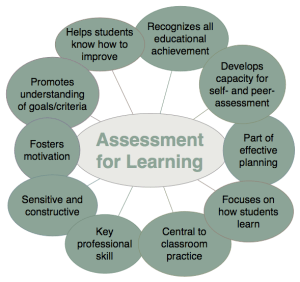
  • Assessment for Learning

AFL is a very important skill and is an area where we could develop within Geography. As teachers we are sometimes too controlling and we must put the onus back on the students for them to achieve. Investigating methods and ways of implementing this into our schemes of work must be one of our priorities. This will encourage student learning and raise achievement across all year groups. AFL will also help improve the student’s knowledge of using a mark scheme and what to include in a good answer. This will reduce our marking and in the long-term our workload.

  • Reflective Teaching (including observations)

As teachers we must be more reflective of our own practice and make amendments where we need to. We must utilise our strengths and work on our areas of development. Observations are vitally important to watch other teachers and how students learn. This would be ideally done within the Department and with other Departments once a term where possible. This should therefore improve our own teaching and benefit the students .Working with other colleagues will help develop cross curricular opportunities to raise achievement throughout the school.

  • Technology

Geography has prided itself on using technology where possible to improve our lessons and the student experience. This needs to be further developed to further enhance our learning and the students. GIS must be developed within the Department across all year groups.

  • International link with a school abroad and feeder schools

As part of our role in the local and global community we would be looking to develop a link with a school abroad. This would develop our student’s knowledge of their role within a global community and understanding of issues that occur worldwide.

Locally we would like to work with the feeder schools on developing our link and improving geography. This would enhance geography’s status and develop their geographical knowledge. Geography is sometimes not always taught in primary schools to a high level and we would like to develop this to help their progression and achievement later on.

Please get in contact regarding what your departments/schools are planning/changing for the future…I would love to hear them especially in these uncertain times with possible budget/curriculum changes.
Where now for geography?


After a very long and stressful journey to work today I was pleased to see one of my articles printed in Sec-Ed. Sec-Ed is the UK’s only free national teaching paper that is sent to every UK Headteacher and staffroom. I am a huge fan of the paper with its well written articles and comments on education and teaching in the UK. I have been very lucky in the past to have had several articles printed by them and I hope this continues for the future. Thank you to Pete Henshaw (Editor)  and Chris Parr (Chief Reporter) for all your help.

The article is titled  ‘Where now for geography?’ and focuses on geography’s fight for survival as a curriculum taught subject. This is quite a personal article being a geographer and I am very passionate about geography’s role within a schools curriculum. The article can be accessed here for your perusal. Enjoy!

TeachMeet

I was recently looking at a variety of education blogs over the Easter break and I came upon a very interesting blog by Ewan McIntosh. Ewan is one of Europe’s foremost experts in digital media for public services, particularly in education. He is an enthusiastic educator with a passion for learning and development who wants to bring education into the 21st century.

He was a key player in setting up one of the most ambitious investment funds from a public service broadcaster in the UK (Channel4), himself making the call on investing over £1m in cutting edge and high impact digital media products. He is also the founder of 38minutes.co.uk, the creative industries platform for the North of the UK. His understanding and application of the latest web, mobile and games technology also continues to influence policy and practice in the world of education, where his personal passions lie.

Ewan founded TeachMeet in 2006 as a means of gathering enthusiastic but often unheard educators under one, beer-filled roof, to share the innovations going on in their classrooms. Senior education officials were always invited along to listen. No keynotes. No spotlight sessions. One teacher to another. Key to its success was gaining support from the education and publishing industry to sponsor drinks, food and a/v for a community that has gone from six educators to several thousand, going from Scotland to a worldwide phenomenon. Personally, I haven’t attended a TeachMeet event as yet (sorry!) but I would love to go to one soon. Talking and listening to other educators is a great way to develop yourself as a teacher and to improve your lessons and school. I have read a lot about TeachMeet in the past and I think it is time one came down to my area of the world! Anyone fancy organising a TeachMeet event down in Dorset?

The National Council for Geographic Education

I have recently found the National Council for Geographic Education website. It is a US-based site where they promote geography as a subject around the world. The site is very useful and is a good way to find out new subject material and activities for your lessons. Their blog is also an excellent way of exchanging ideas and thoughts on the world of geography. I have been in contact with Joseph Kerski (who co-runs the site), a passionate and enthusiastic promoter of geography – we need more educators like Joseph!

The NCGE are also hosting thei, National Conference on Geographic Education, an annual event where geography educators from across the USA and around the world meet to exchange ideas, research, resources, and best practices in geography education. The conference is filled with opportunities for participants to attend workshops, paper and poster sessions, field trips, and more. Long-time conference participants enjoy the collegial atmosphere of the conference, opportunities for networking and brainstorming, and endless prospects for professional development. The NCGE Conference in 2010 is in Savannah, Georgia in the USA from 29th September to 3rd October. If they are looking for anymore guest speakers I would love to take part!

The ‘Big’ Picture

On the 8-10th April the GA is holding its annual conference. This year it is held in the University of Derby. The theme for 2010 is ‘Geography: The Big Picture’ and focus’s on:

  • How changes in the primary curriculum following the Rose and Alexander Reviews will affect the broad picture of geographical education
  • How geography is perceived through images by the wider public
  • Creative use of images and maps
  • How geographical research can contribute to key global issues and debates

Young people need to become global citizens and encouraged to learn about their local area, their county, their country and about the world. Geography has for sometime been losing its position of importance. In KS3, 4 and 5 elements of geography are taught in other subject areas especially science.  With science as a core subject where is geography’s place? We need to define geography as a subject in its own right. The importance of geography needs to be made clear by the Department of Education. We need to reclaim our topics and rebrand ourselves as a twenty-first century subject.

With an ever-changing world geography must be at the forefront of educational thought. Being versatile, experimental, and very much of today it should be leading the future of education. As a teacher I have worked in several forward thinking schools where opportunities to attempt new ideas were welcomed. I am very lucky in this respect. I have been fortunate to have witnessed great teaching in my years as a teacher.

Why become a teacher?

Teaching in my opinion is the greatest role in life that someone can do. To actually see the look of wonder and understanding on someone’s face is something that cannot be bought. To pass on knowledge and see where it takes a young person in life is amazing. To actually help young people in life choose a path in the life with your encouragement and guidance is breathtaking.  Last year I wrote an article for Sec-Ed called ‘Proud to be a teacher!’, and it outlined my reasons why teaching is the best profession, this can be accessed here and via my blog here. Below are my ‘Top Ten Reasons to be a Teacher;’

  • To teach a subject you love and have a passion for
  • To help motivate and inspire young people to be passionate about learning
  • To learn more about your subject and you as a person
  • Teaching keeps your mind young
  • To work in a innovative environment
  • To be your own boss and develop your own lessons and SoWs
  • To work with a wide diversity of people from different environments
  • To make a difference and give something back to society
  • To learn from others especially the pupils
  • The long holidays

As Batman once said, ‘it isn’t what you say that defines you but what you do’ (Batman Begins, 2005).

Earth Hour – Get Involved


Today, Saturday 27 March 2010 at 8.30pm, the WWF want a billion people around the world to switch off their lights for one hour – WWF’s Earth Hour. The idea is to raise awareness regarding climate change that is affecting our planet. The first Earth Hour was in 2007 in Sydney, Australia where 2.2 million people took part. Since then it has gone global, 50 million people in 2008 and over a billion in 2009. In 2009, 4000 cities in 88 countries took part. The message is clear, climate change is not about the country you are from but the planet you live on.  

The WWF works to create solutions to the most serious environmental problems facing our planet, so that people and nature can thrive. Climate change is the biggest threat of all. Impacts such as changing weather patterns, warming seas and melting ice threaten to devastate people and nature, and to jeopardise all our conservation successes.To tackle the threat, it’s vital that world leaders agree effective international action. The WWF want urgent global action to safeguard the natural world. We’re already seeing the impacts of climate change – from melting Arctic sea ice to flooding and droughts.  

Tidd Tower will be turning its lights off at 8.30pm tonight. To get involved go to the WWF Earth Hour website here

Assessing Your Subject Area

This week myself and the geography department have been looking at how effective we are as teachers, as a department and ways of moving forward. This is not always easy to do but a very important part of our role as teachers. It is vital that as practitioners we are reflective and build upon our strengths and areas for development. Every teacher is different and all add something to a school.

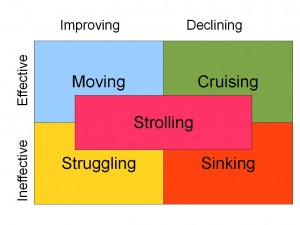
This week we have used Stoll and Fink’s analysis upon our department. It was originally used as a tool to look at whole school development but many practitioners are using it for subject areas.

Using the diagram above and the explanations below you have to try to judge your department/school on where you think you are. We tried to look at individual key stages as well.

Moving

  • Boosts student progress and achievement.
  • People work together and respond to change.
  • People know where they are going and have the will and the skill to get there.

Cruising Subject Area

  • Appear to have many of the qualities of an effective subject area.
  • Pupils achieve despite the teaching.
  • The people are responding well to change.

Strolling Subject Area

  • Neither particularly effective or ineffective.
  • Move at an adequate pace to cope with change.
  • Have ill-defined aims.
  • Conflict sometimes inhibits progress.

Struggling Subject Area

  • Ineffective and know it.
  • Expend energy trying to improve but results in “thrashing about”
  • They are willing to try anything and will ultimately succeed.

Sinking Subject Area

  • Staff are isolated.
  • There is an unwillingness to change either through ignorance or apathy.
  • There is a blame culture.
  • Student achievement is poor and failing.

It is not an easy task and you have to be very honest as a department. It is an ideal tool especially with self-evaluation high on the list of things Ofsted look at. It also gives you and your department to start thinking about what areas you might need to develop over the coming months or year. As a Head of Department it has made me realise where we need to go as a department and what our priorities are for the year ahead.